
These guys look so dapper as they pose for a quick selfie. I wonder if they are a couple?

These guys look so dapper as they pose for a quick selfie. I wonder if they are a couple?

May this post help distract you from the fact that it is a Monday morning.

This week’s Scruffy Sunday comes from a photo posted last year on the Fearsome Beard blog.

Enjoy your morning cup of Joe (or whatever you might like to call him).
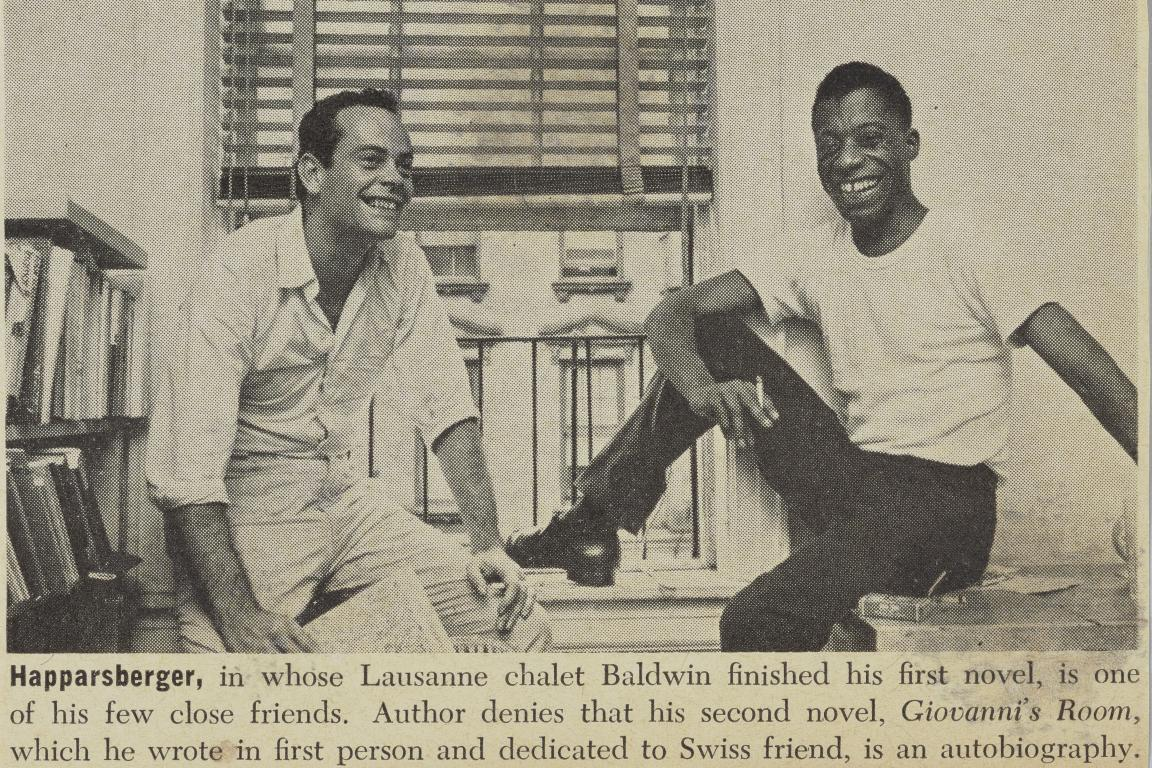
James Baldwin was romantically linked to the bisexual Swiss painter, Lucien Happersberger. They met in Paris in 1949 when Lucien was 17 and remained lifelong partners, but as you can read from the newspaper clipping shared above, the public would only know them as “close friends”.
In addition to his book Giovanni’s Room, which I highly recommend. Baldwin was highly quotable. Below is a personal favorite quote of mine.
I love America more than any other country in the world and, exactly for that reason, I insist on the right to criticize her perpetually.
James Baldwin, American author, poet and activist
I dedicate this weekly post, featuring vintage gay photographs, to the men and women who lived in a more critical time where being true to yourself and loving who you want wasn’t always an option and came at a great price. Do you have a photo you would like to share? Email me at bosguymail@gmail.com.
The Boston Gay Men’s Book Club chose Eric Cervini’s 2020 book, The Deviant’s War: The Homosexual vs. The United States of America for this month’s read. It was my first time joining a book club, and I really enjoyed listening to people share their thoughts. The organizers surprised everyone by having the author (shown below) join the MeetUp to answer questions about the book which was really kind of amazing.
The Boston Gay Men’s Book Club meets virtually due to COVID-19 and as a result is really open to anyone interested in joining a book club that focuses on gay literature. You can learn more or sign up to join here.

This is a book about the beginnings of the gay movement here in the United States, but focuses on Franklin Edward Kameny, a World War II veteran and gifted astronomer turned reluctant, gay activist and litigator after he was entrapped by the S.F.P.D. in 1957 and charged with “lewd conduct”. The charge would result in Kameny losing his certification to work for the Department of Defense just as his promising career was starting. He would be barred from employment with the Federal Government and agencies that served our government just as the Cold War’s space race between the U.S. and U.S.S.R. started.
After World War II, Homosexual arrests…occurred at the rate of one every ten minutes, each hour, each day for fifteen years. In sum one million citizens found themselves persecuted by the American state for sexual deviation.
Simply put, Cervini’s book is a page turner. We learn early on that Kameny is a gifted intellectual. He learned to read by age four. By age six he decided he would be an astronomer and at the age of 16 enrolled in college. He would serve in the military during WWII and went to Harvard after the war in 1948 to begin his PhD in astronomy. However, the career he cherished and had so much to offer would be denied to him, because our government would label him a deviant.
The personal struggles and obstacles Kameny faced were not unique. What was unique, was Kameny’s conclusion that homosexuality is “moral in a real and positive sense, and are good, right, and desireable, socially and personally”. This view was at odd with the U.S. government, the medical community and the public at-large which perceived homosexuality as a dangerous deviance. When Kameny approached the American Civil Liberties Union (ACLU) in 1958 to ask for help he received the following response, “It was not within the province of the Union [ACLU] to evaluate the social validity of laws aimed at suppression or elimination of homosexuals.”, meaning if you were a homosexual the ACLU would not work with you or help you because you were considered a deviant.
In telling the story of Kameny’s extraordinary life, Cervini shares how self-respect and pride in one’s self emerged to become the cornerstone of the modern LGBTQ movement.
Facing this reality, Kameny used his intellect and tenacity to fight back in the courts. For years his efforts would be in vain, but homosexuals facing similar treatment sought him out. He would go on to found the Mattachine Society of Washington D.C., organize and participate in the first public demonstrations for gay rights, be among the first to ask politicians to support gay rights, run for Washington D.C.’s first congressional seat, and form an ongoing legal defense for victims through the 1960s and 1970s.
Aside from being a fascinating read, the book helped provide me with some much needed perspective on how much society has changed and helped me understand where and how the modern LGBTQ movement started. It begins more than a decade before the Stonewall Riots, introducing the controversial (and unethical) work done by sociologist Laud Humprhies as well as what Kameny and several others did in the 1950s and 1960s to help pave the way for the LGBTQ community to organize, self-actualize and speak up. This book introduced me to compatriots and contemporaries of Kameny who I had not heard of before. I hope because of the attention given to these activists, more will be revealed about their lives and contributions in future publications. I would love to see this included in U.S. History curriculum and as part of school reading lists.
Though Kameny did not have a term for it yet, by exposing the arbitrary logic of the purges with his own, contrary logic, he formulated gay pride as a political tool of resistance, a weapon to be wielded for now [1961], only in the courts.”
If you’re interested in purchasing this book and open to supporting local bookstores, try one of the links I’ve shared. They will take you right to the book so you can order it online in just a couple of clicks. Alternatively, you can check your local library for a copy of this book. Here is a link to the BPL for The Deviant’s War.
Brookline Booksmith in Coolidge Corner
Harvard Bookstore in Harvard Square
Porter Square Bookstore in Porter Square
Trident Bookseller’s & Cafe in Back Bay

Brian Morr is a menswear and lifestyle blogger who calls Manhattan home. You can check out his blog, Sink the Sun. I liked this photo which he posted this past fall and thought it made for a great Scruffy Sunday post.

I had no idea that grey sweatpants and coffee made for such a compelling pairing.
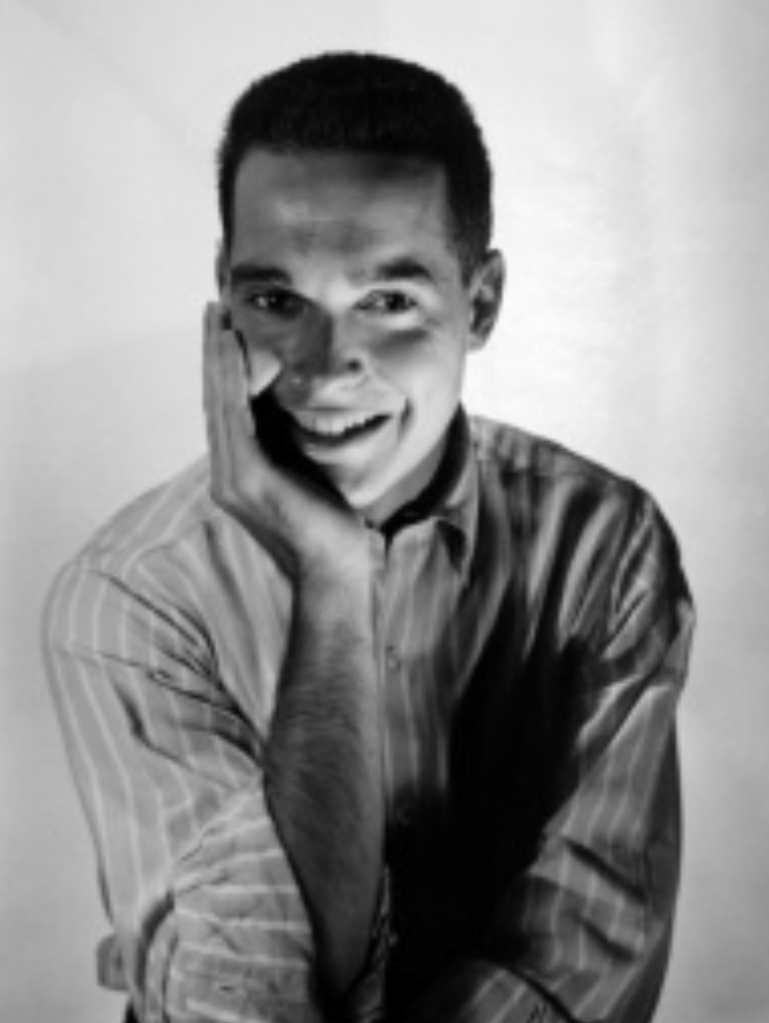
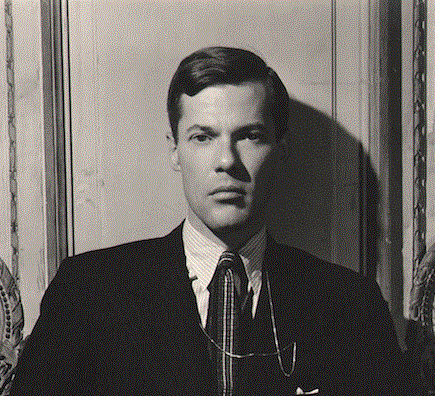

This week I’m featuring three men who for nearly twenty years lived in a polymorous relationship in the first half of the 20th century. Monroe and Glenway first met in 1919 at the Poetry, Club of the University of Chicago when Monroe was twenty and Glenway was eighteen. In 1927 the two would meet George and form a unique bond. Back in 1998 a picture book of this thruple’s travels through Europe between 1925 – 1935 called When We Were Three “The Expatriate Years” was published. It is amazing to think the eyebrows these three must have raised wherever they went.
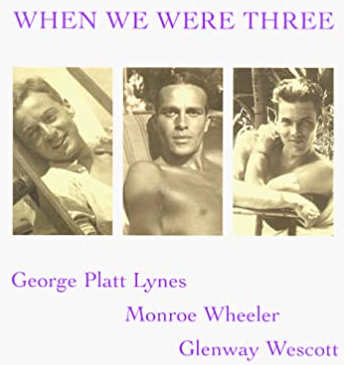
Monroe Wheeler (1899 – 1988) was an American publisher and museum coordinator. He would spend the rest of his life with Glenway Wescott and die one year after Wescott’s passing, requesting that his ashes be buried with his lifelong partner.
Glenway Wescott (1901 – 1987) was an American poet, novelist and essayist. He mixed with many American expatriates in Europe and was the model for the character Robert Prentiss in Hemingway’s The Sun Also Rises.
George Platt Lynes (1907 – 1955) was an American photographer who worked in the 1930s and 1940s, producing many photographs that featured gay artists and writers. These were acquired by the Kinsey Institute after his death in 1955.
I dedicate this weekly post, featuring vintage gay photographs, to the men and women who lived in a more critical time where being true to yourself and loving who you want wasn’t always an option and came at a great price. Do you have a photo you would like to share? Email me at bosguymail@gmail.com.


May this post help distract you from the fact that it is a Monday morning.




 BosGuy