Tag Archives: Michael C.

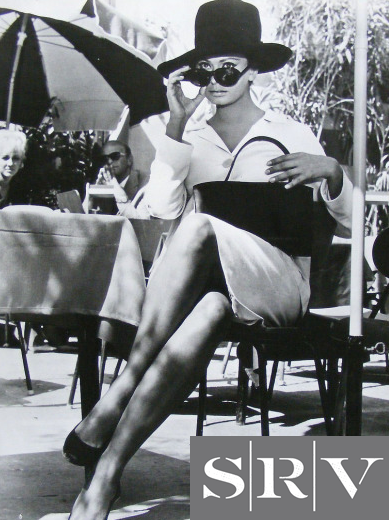
Michael C reviews South End restaurant S.R.V.

South End restarantItalian eateries may be a dime a dozen, but SRV, the new South End addition, is a welcome departure from the beaten path of red-and-white checkered tables and chianti bottle candleholders, says my culture and lifestyle correspondent, Michael C.

Oh great, another Italian restaurant in Boston! As if Cinquecento, La Motta’s and Stella, to name just three in the South End alone, aren’t enough. I always say that we need another Italian joint as much as we need another Greek one, complete with Ionian columns, the ubiquitous Greek Key on the wall and a statue of Hercules slaying the Hydra. In other words, we don’t.

Let me take that back. I’ll qualify my statement and clarify that, well, it depends on what kind of Italian we’re dealing with. Italian food has become such a broad and loose term it almost means nothing. There is, after all, a difference between chicken parm drenched in marinara and the authentic Italian fare (Venetian to be precise) offered at the Serene Republic of Venice, or SRV for brevity.

The food – dinner may start with decently-portioned – and priced – cicchetti (Italian for tapas or meze) that don’t leave you feeling ripped off at the palate or the pocket. These are creative, interesting and esthetically satisfying dishes, albeit on a menu peppered a little too liberally with esoteric Italian culinary terminology – you know, for the mandatory element of pomposity. After all, why bother dining out if you can just tell what every dish is comprised of without third party consultation, right? At SRV, the redeemer of this affectation is its purpose, namely to stimulate conversation between you and your server (in my experience, a very stylish, graceful and impeccably attentive young lady). The much-publicized fact that they mill their own flour is a nice touch that can actually be tasted in the outstanding pastas – this isn’t your college cafeteria spaghetti and whatever, I promise.

The ambience – the décor is more than just passable. It’s chic with the right amount of quirk. I liked the exposed brick (typically a little overdone these days), dotted with ceramic planters, although I would hang twice as many. I loved the pendant lights, seemingly made of repurposed crystal decanters and pitchers and was enamored with the tile-hardwood combo floor in the bar area, in my mind channeling the designer Paola Navone. I must say, however, that the color scheme left me longing for more. The velvet upholstery on the banquettes could have been forest green, rather than that ubiquitous steak house burgundy. But hey, you can’t have it all, can you. Overall, I liked it – a lot.

The bonus – even if I hadn’t enjoyed the food and space as much as I did, I’ll admit right now that a lot would have been forgiven on account of one specific feature that is really (and I mean really) up there in my books, namely the restaurant’s flawless acoustics. It was a full house, yet the place never felt loud. It was perfectly conducive to civilized conversation and the music, though unmistakably present, never intrusive or distracting. What a novel idea – rejoice! Now you can actually enjoy dinner and hold a conversation without screaming at the top of your lungs, as you have to at another South End hotspot with the worst acoustics ever – which of course will remain nameless 🙂

SRV – 569 Columbus Avenue, Boston, MA 02118
Telephone: 617-536-9500
www.srvboston.com

Michael CAbout the author:  A former banker, Michael C offsets the sobriety of his professional life with his passion for design, music, the arts and anything beautiful.

© Michael Constantinides 2016 – all rights reserved

Boston’s slow but certain swing towards modernism

Photo Credit: Liza Voll

Photo Credit: Liza Voll

The following was written by BosGuy friend and occasional blog contributer, Michael C.

RANT – Ask anyone living in Boston and they’ll agree that it is a city with an almost fetishistic fixation on the old-school. The traditional colonial esthetic and the often misguided notion of deference to historical accuracy. In fact, this fixation has earned Boston the reputation among its more avant-garde residents as the city where everything is forced to “blend in”. No esthetic deviations from Victorian and Beaux Arts allowed here! Although most of my friends have already listened to my spiel, for the benefit of everyone else who hasn’t, I’ll say again that the most glaring example of Boston’s mentality has manifested itself through the new Liberty Mutual building – causing every modernist hair on this guy’s head to stand on its root. The way I see it, we had an opportunity that in a big city comes about once – maybe twice – every fifty years or so: to build a major landmark from the ground up. And how did we respond to that challenge? Perhaps by creating something exciting that will go on to become an architectural reference point for generations of future architects – an architectural icon? Oh no – instead, we thought it was a better idea to erect – again, from the ground up – a monolith that’s deliberately intended to mimic its neighbor, the original Hancock building, completed in 1922. Cutting edge, eh? These are the moments I catch myself exclaiming, sometimes out loud, “Seriously?!

While we’re at it, can we talk about the MFA and Isabella Stewart Gardner Museum? We commissioned two starchitects, Norman Foster and Renzo Piano, to design the state-of-the-art additions to the respective museum buildings. Several years of much-publicized mega construction and anticipation later and all we have is two boxy, painfully unimaginative, boring stone and glass cubes. Why bother commissioning celebrity architects only to stifle their creativity and compromise their vision? Excuse me, but has anyone seen the new wing at Toronto’s Royal Ontario Museum? Oh I’m sorry, I forgot – that’s a “monstrosity” by Boston standards. Oh quit your grumbling, you say. What about the ICA, our museum dedicated to modern art? Do you mean, that token modern building that’s banished to Fan Pier, like a petulant child in time-out since 2006, because out there in the wilderness there’s nothing to make it conform to. That building, designed by Diller Scofidio + Renfro, that happens to be conveniently hidden out of immediate sight so as not to upset our Quaker sensibilities? Yes, that one.

END OF RANT – But lest you think I’m judgmental grouch, let me clarify the rationale behind my grouching. I’m actually going somewhere with this. You see, having resigned to the expectation that Boston will remain the city that says no to 21st century esthetics, I’ve found myself pleasantly surprised and my spirits lifted by my recent string of experiences in our fair city’s cultural scene. Let me share a few.

THE PERFORMING ARTS – As a passionate lover of opera, that decidedly old-school art form, I’ve always felt frustrated with the Boston Lyric Opera company’s reluctance to recognize that, in the absence of a hefty endowment and production budget like the Met’s, grand opera on limited funding is miserable. Miserable in look and feel. Miserable in creativity. Generally, pretty pathetic. But by George, recently BLO’s got it! As they demonstrated through their last couple of seasons, when one embraces Modern like one means it, the results can be quite astonishing, and with no fewer octogenarian patrons than in past seasons. Wagner’s Flying Dutchman, performed amid raw scaffolding and moving rough seas projected on the massive stage wall. La Traviata and Cosi Fan Tutte, both operas in period costume albeit on dreamy, Dali-esque sets. And of course La Bohème, the bread and butter of the global lyric stage, still set in Paris, but moved from late 19th century to the 1960s with bell-bottom denim and shaggy shearling vests. To boot, embracing a modern production typically carries the added bonus of freeing up budget, which allows focus on what matters the most – the music – while forcing beauty to shine through simplicity and minimalism without polluting it with shoddy ornamentation and kitschy embellishment. So, kudos to BLO from your humble young(er) patron! As an afterthought however, one does have to wonder whether those schlocky sets and school-play costumes of the past were more a result of bowing to the demands of a visually conservative audience rather than the work of a narrow-minded production team.

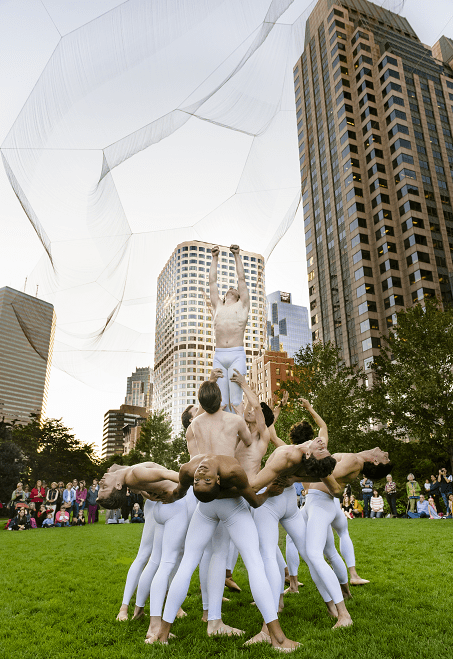
THE PUBLIC ART– Another breath of fresh air is the large-scale, 10-floor tall “swimmer” mural by secretive French artist JR on the southwestern side of 200 Clarendon, formerly the Hancock Tower. A man on a diving raft, floating in the middle of a “sea” of glass. How cool is that? Spectacular in its appearance and so clever in its simplicity (why didn’t I think of that?). Then there’s Janet Echelman’s hypnotic aerial sculpture As If It Were Already Here that for six months graced the space above the Rose Kennedy Greenway outside South Station. Does this art installation represent art in the sense that it depicts a person or a flower or a landscape? Who cares? The question we should be asking ourselves is “does it make me think?” Even if that means scratching my head trying to understand what the hell I’m looking at, the piece has fulfilled its purpose. You may never figure it out and that’s perfectly fine, but consider this: it’s in the financial district. It’s a part of town crowded with men in pleated pants and shirts that fit looser than a tent. Isn’t it just awesome to inject into that habitat something forward-looking, something quirky, something esoteric and different? Don’t answer – it’s a rhetorical question.

THE NEIGHBORHOOD – Have you seen that remarkable home on South End’s Taylor Street, which I’ve dubbed “the Shutter House”? I have no idea what the owners had to do to get the city to OK it (and frankly I’m not even sure I want to know) but whatever they had to do, it was well worth the certain ordeal. For people who love modern architecture the appeal is pretty straightforward. Others may see it as a hideous affront to the neighborhood’s homogeneous character, style and historical integrity and it’s their right and privilege to see it that way. But in fact, that home acts as an enhancer of the quaint charm of the picturesque Victorian one-block street, if not its whole immediately surrounding neighborhood. By its arrival on the block as an alternative modern kid in an overwhelmingly historic environment, Shutter House has achieved a great success: for from attacking history, it complements and elevates it, making it even prettier – and more obvious to appreciate. Personal tastes notwithstanding, the house is esthetically beautiful. Even if you don’t believe in esthetic diversity, period, you may want to read the Globe’s write-up on Shutter House. Getting acquainted with it will almost certainly help you at least appreciate it as the triumph it represents. As long as something is well-made with good taste, meticulous care and obvious passion, it’s beautiful. Get over it and guess what – there are some real eye sores out there and this brave little house isn’t one of them.

THE HIGH HORSE, DISMOUNTED – OK, I’ll stop. Let’s just say that to watch Boston’s esthetic palate evolve over the next 5 years given this glacial shift in direction, will be riveting – and I’ll leave it at that. With the supremely boring but unquestionably modern Millennium Tower nearly finished and the impressively funky (dare I say, gasp, futuristic?) new Government Center T station entrance nearing completion, modernists and eurotrash all over town are holding their collective breath. But let’s not jump the gun here. Baby steps is the name of the game, and that is something even the most enthusiastic modernist must respect. As the traditionalist Bostonian will argue, if you want to see glass high-rises and funky museums getting yanked out of the ground every week, move to Miami. This is Boston. Fair enough, I say. But let me ask you this, traditionalists – yes, you. While busy rolling around in your conformist self-righteousness, have you noticed that the shape of the new Government Center T station is a nod to the Old State House a block down the street? If that’s not the ultimate bow to history by modernism, I don’t know what is – just saying.

Michael CAbout the author:  A former banker, Michael C offsets the sobriety of his professional life with his passion for design, music, the arts and anything beautiful.

© Michael Constantinides 2016 – all rights reserved

Coffee culture: Coffee-as-a-pursuit (CAAP)

Michael C.You need to turn coffee drinking as a means to an end into the end itself, says culture and lifestyle contributor, Michael C.

IT WILL BE INTERESTING to see exactly what goes into the Tremont Street space formerly known as Francesca’s. I initially heard through the grapevine that Peet’s Coffee had secured the space, although apparently that’s now up in the air. But regardless of who moves in or when, if it’s a coffee shop I do hope they are wise enough to create something that takes into account the neighborhood’s love of coffee as a pastime. Because, you see, coffee is for South Enders and Euro-trash alike, not merely a beverage but a pursuit – indeed, an institution in and of itself. Right?!

When traveling abroad, my single favorite activity is sitting at a café (preferably independently owned and out-of-doors), espresso with lemon twist in front of me, engaged in some serious people watching. That’s right – not shopping, not clubbing, not sightseeing, but coffee! Most museums have fantastic in-house cafés anyway so it’s often a no-brainer win-win for me. As a born and raised European who has made this beloved land his home, this is where I feel that US society’s reverence towards the institutional identity of coffee-as-a-pursuit (CAAP) leaves a lot to be desired. Ask any person who crosses your path what comes to mind when they hear coffee and chances are they will tell you it’s a wake-up beverage in a paper cup, lid, cardboard sleeve and all, consumed on the run, on the move, on the way somewhere. Why, oh why can’t people see that coffee is that somewhere?

It’s a state of body and mind – a most civilized pursuit. It is something that should be enjoyed in sacred silence at dawn, with the life-and-arts newspaper section in the afternoon, over convivial conversation any time of the day and in countless other settings, never in a rush but as the ultimate activity. I recently ran into an old French friend on Shawmut Avenue and when asked what she was up to, this stunning Capucine look-alike replied with a smile “I’m going for coffee – join me?”. “Capucine” obviously gets it!

Based on my criteria, which I assume are clear by now, here is a list of M’s favorite coffee temples in Boston – and yes, M cares about the quality of the coffee. See you there!

South End Buttery – No introduction necessary. Everyone who’s alive in the South End knows the incomparable charm of this beloved neighborhood corner hangout.

Wholy Grain, Shawmut Avenue – no porcelain cup and saucer option due to legit space constraints, but the whole operation is so simpatico it’s impossible no to like – the small, independent neighborhood coffee shop is what we’re missing in this city.

SIP Café, Post Office Square – one of Boston’s independently owned coffee treasures and one of the closest CAAP establishments in Boston. Huge fan here!

L.A. Burdick, Back Bay – strictly speaking, a hot chocolate place but the coffee is good too – insanely bridge-and-tunnel-packed on weekends but very atmospheric on weekdays.

JaHo, South End – small, independent, bookish – good for coffee, sweets and work.

Flour, Clarendon Street – Ms. Chang’s Back Bay outpost proves that she, too, gets it.

Starbucks, South End – yes, it a mega-corporation, but surely one to emulate – beside offering good coffee in porcelain and (perpetually occupied) seating, this company’s respect for ethical business practices and equal rights is truly something to feel good about supporting.

Michael C About the author:  A former banker, Michael C offsets the sobriety of his professional life with his passion for design, music, the arts and anything beautiful.

© Michael Constantinides 2014 – all rights reserved

Samurai! Armor From The Ann & Gabriel Barbier-Mueller Collection

MFA SamuraiThe following review was written by Michael C.

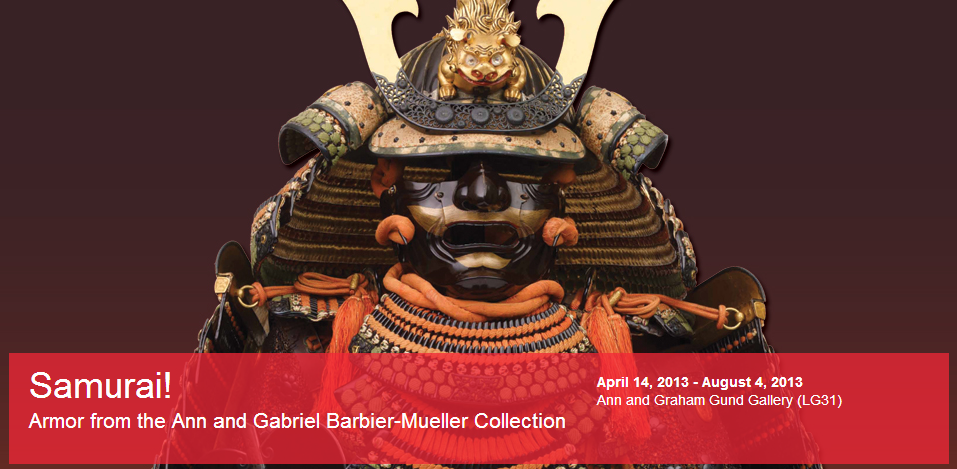
Friend and contributor to BosGuy blog, Michael C., recently reviewed SAMURAI! ARMOR FROM THE ANN & GABRIEL BARBIER-MUELLER COLLECTION now on view at Boston’s Museum of Fine Arts through August 4, 2013.

OK, so I’ll admit it – the MFA’s Samurai! exhibit (April 14 – August 4, 2013) was not at the top of my to-do list for this summer’s Boston (vs. P-Town) weekends. Warfare-themed shows or anything that’s inspired Tarantino-league “visionaries” really isn’t my cup of tea.

But at the urging of my highly-evolved designer friend Marty (I think “amazeballs” was the word he used to describe his experience), I decided to give it a shot. And with that, off to the MFA I went, and man was I surprised! The creativity, craftsmanship and art that goes into creating that armor – indeed that whole look – will blow your mind away. Picture this: armor made of sumptuously luxurious fabrics and leather, interwoven with iron. Brocade-lined and fur-trimmed overcoats. There’s lacquer and gold ornamentation that signifies the warrior’s clan and overlord. Add to that intricate, tasseled silk knots, helmets and masks so seriously embellished that they belong more on a catwalk than in a battle scene. Yes, I dare say I was intrigued too.

The show makes the viewer wonder whether these works of art were really designed and crafted to be worn in battle. It’s like debating whether to wear couture to tea dance 🙂 And that’s when I realized how off I had been in my uninformed preconception of the whole Samurai culture. For example, I did not know that, though initially elite warriors, the Samurai came to represent one of the most influential forces in the evolution of modern Japan as we know (or not know) it. Their function as ultimate fighters, often glorified and romanticized in comics and cult movies, gradually became obsolete but their personal qualities as respected men of integrity, loyalty and unparalleled wisdom, have endured, thus affording them their gleaming aura of the “perfect” citizen.

And in turn, Samurai! is a perfect activity for a rainy Saturday in Boston (a.k.a. every other Saturday this summer).  Whether you’re into the Japanese culture and art or simply into art or anything educational, this show will satisfy all your tastes. Hey, it’ll even please your junk food-munching, football-watching brother-in-law and your 10-year old nephew, so you may as well make it a family outing. It’s all so manly!

Michael CAbout the author:  A former banker, Michael C offsets the sobriety of his professional life with his passion for design, music, the arts and anything beautiful.

© Michael Constantinides 2012 – all rights reserved

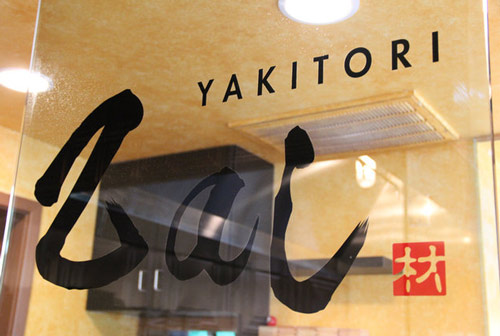
Restaurant review: Yakitori Zai

Yakitori ZaiThe following review was written by Michael Constantinides.

Yakitori Zai promises a culinary experience off the beaten path on the South End’s most favorite intersection, says lifestyle contributor Michael C.

IT’S THE CORNER OF SHAWMUT AND UNION PARK or officially, 315 Shawmut Avenue. For almost two years, we walked past this address and it pained us to see the most incredible commercial spot in the South End sit vacant and unutilized – After Joe V’s closed, we thought of the many a wasted summer evening when, with what pleasure, we could have been sitting on the bumpy patio enjoying a civilized dinner and a glass of Sauvignon Blanc or the many a January night when we could have been parked by the fish-bowl windows watching people walk by outside in the snow, Edward Hopper-style. If only there was a restaurant there. It was a crime.

Since last June, lo and behold, there is new hope for this beloved spot, courtesy of Yakitori Zai. It’s not like it didn’t take the owners forever to actually open and it’s not like they weren’t abysmally clueless when they decided to initially offer only “tasting reservations” at around $120 per head (I suppose they were very savvy in the art of shooting oneself in the foot).

Anyway, all that’s behind us now! The menu is extensive, interesting and reasonable and the whole concept of yakitori, fascinating – here’s how it works: the bite-sized pieces of meat, seafood and vegetables are simply grilled and flavored with sauces, glazes, crusts and other accoutrements that cause explosions of taste in the mouth – not a single part of that chicken going to waste (yes, of course you only order the parts you can handle).

I had dinner at Zai the other night with a friend – a rather sophisticated gentleman – and, granted I had just stepped off a plane, I don’t think it was mere hunger that caused us both to really enjoy the experience. The chicken breast, prepared in three different ways melts in your mouth like marshmallow, the duck is tender (not an easy feat), the chicken and egg rice bowls and noodle soup hearty, the okra not slimy and, above all, the portions are controlled (if you want all-you-can-eat, try the buffet at Yangtze River in Lexington, MA – no joke – it’s worth the drive).

However, a tip for the management: please get rid of the hideous yellow/brown walls, which, if I am not mistaken, may be a relic from Joe V’s – seriously?! Consider a sultry dark gray or a funky hand-painted wallpaper (think Devon’s in P-Town) to complement your fine fare with that subtle touch of ambiance that’s oh-so-important to a South End dining establishment – in other words, get with the program.

Admittedly, Zai is not the cheapest place you can get dinner on a Thursday night but, contrary to rumors, the place is not hideously expensive (anymore). Think of it as halfway between your authentic noisy Chinatown eatery and the nationally famous Oya in the Leather District – a good balance of culinary delight and affordability. And all this at the most beautiful, charming location in the South End, people! So give it a shot. Support this new culinary idea that’s landed smack in the middle of our beautiful neighborhood. Don’t let 315 Shawmut go empty again. Be a South End culinary vigilante.

Yakitori Zai, 315 Shawmut Avenue, Boston, MA – www.yakitorizai.com

Michael CAbout the author:  A former banker, Michael C offsets the sobriety of his professional life with his passion for design, music, the arts and anything beautiful.

© Michael Constantinides 2012 – all rights reserved

Mario Testino exhibit at MFA Boston

The following post was written for me by Michael Constantinides.

testino-mfa-bostonMARIO TESTINO: IN YOUR FACE is on view at Boston’s Museum of Fine Arts until February 3, 2013.

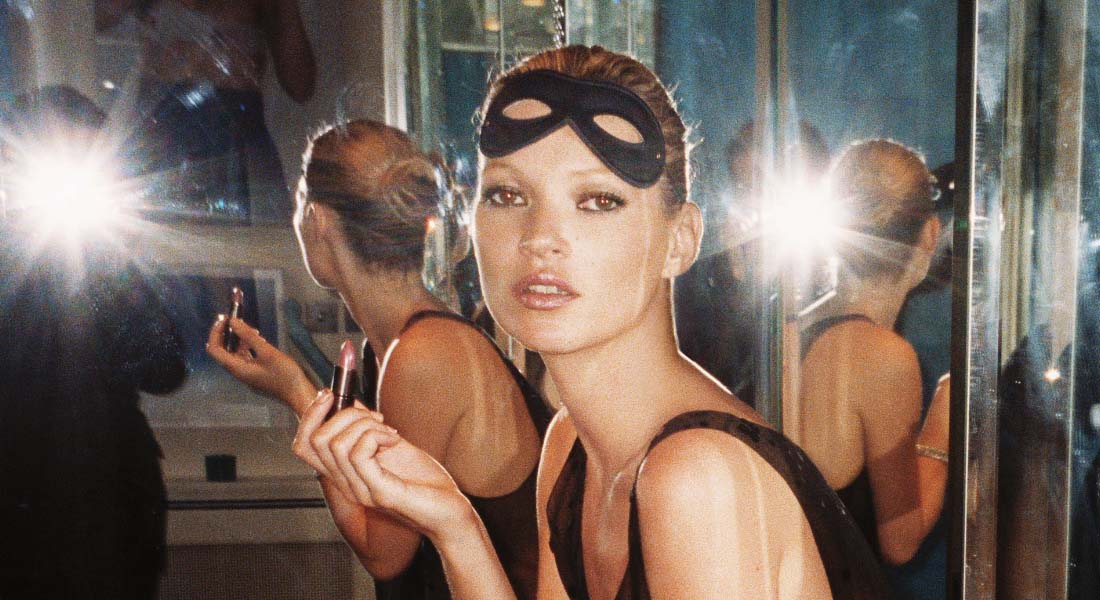
The line at the MFA’s main entrance started outside the building but, thankfully, kept moving – almost every person in that line waiting to view the broadly publicized Mario Testino “In Your Face” exhibit. I saw some boys buying MFA memberships on the spot, which instantly bestowed upon them the right to immediate entry into the building, bypassing the line (“I don’t do lines”, I overheard). And all this for good reason. These people just knew they were about to become intoxicated with photographs so esthetically gratifying (JLo’s turquoise Narciso Rodriguez gown billowing in the wind as she tethers 5 Doberman Pinschers), yet so vivid and realistic, arguably almost harsh (every follicle of fuzz on Kate Moss’ otherwise perfect nose visible, right there – IN YOUR FACE). Visitors will smirk at the handsome Tom Brady captured in a cute boyish grimace as he mimics the bark of his fellow model (Tom’s wife, Giselle, is herself the subject of several pieces on show). They will also admire Demi’s statuesque body, which certainly has me upping my squat routine – you’ll see for yourselves – the photograph that is. And of course who doesn’t want to revisit the iconic female nether region trimmed not into a mundane landing strip but in the shape of an angular letter G (that’s for Gucci)? The exhibit consists of approximately 120 super-enlarged, striking images that will send you into a visual crescendo.

And yet, regular museum goers may leave the exhibit feeling disillusioned – not with the Testino show – that’s exquisite – but with what seems to keep museums open these days: art not in its own right, but only as associated with either fashion or celebrity. Yes, fashion is sublime. Philosophically, however, there’s something sad about the reality that museums, those beacons of learning and civilization, have to pivot their shows around our celebrity-obsessed “culture”, or face extinction. And it’s true, indeed, that museums were not built to be empty so curators are justified adapting and doing whatever it takes to get people in there – hopefully people curious enough to wander off into the other areas and maybe become interested enough to return – perhaps buy or actually use that membership. Mr. Testino is a brilliant photographer and an artist in his own right who deserves to be showcased and honored. But I’d still have liked to see a line this long for, say, the Hopper exhibit or the Titian show a few years ago.

So do I recommend this exhibit? O-M-G, yes, go! You’ll love it. But here’s my suggestion – make an evening of it and do give the Linde Contemporary Art Wing a visit too. Also, do try the Allure of Japan show (running until December 31). Between exhibits, indulge in an espresso or – gasp! – dessert at the MFA’s colossal sun-drenched atrium café. You may be surprised with what you’ll discover on a day with the arts.

About Michael:  A former banker, Michael C offsets the sobriety of his professional life with his passion for design, music, the arts and anything beautiful.
© Michael Constantinides 2012 – all rights reserved