I’ve written a four-part series featuring different luxury hotels in Boston for gay travelers who may be visiting the area. These articles are also for locals who may want to pamper themselves with a posh stay-cation and those who may never spend a night but would like to treat themselves to hotel services and or dining. We can all do with a little pampering and these hotels are ready, willing and more than able to help you feel special.
lux·u·ry ˈləɡZH(ə)rē/ noun: the state of great comfort and extravagant living.
Boston luxury hotel spotlight for gay travelers
Over the past few years several luxury brand hotels in Boston have opened and / or undergone significant renovations and are now open for business. Even if you don’t have the budget to fully experience the ammenities, it is possible to experience luxury in doses. The Newbury Hotel in Boston’s Back Bay is one such newcomer worth checking out.
When I think of luxury, The Newbury Hotel, (formerly the home to the Ritz Carlton for 75+ years) comes to mind. In 2019 the luxury hotel chain Taj Hotels closed the property and extensive renovations have recently finished. The elegant building that first opened in 1927 has been lovingly updated and reopened to the public as The Newbury Hotel in late May.
For those familiar with the property, the most notable change from the exterior is the hotel’s main entrance which moved from Arlington Street to Newbury Street. The Newbury Street entrance provides greater curb appeal and is easier for those arriving or leaving by car. The other significant change to the building are the enhancements made to the guest rooms. When the building first opened in the 1920s, many guests traveled with large steamer trunks and the hallways were much wider to accommodate them. By modernizing the width of the hotel hallways the Newbury was able to give more space to the guest rooms.
Photo from Newbury Hotel Instagram
Newbury Hotel restaurants and more
If a stay at The Newbury is not in the cards, you can still admire and enjoy this beautiful place and the excellent service from the staff by visiting The Street Bar (see below). The street-level bar looks out across Arlington Street and has nice views of the Public Garden. If you’re familiar with the previous bar, you’ll be pleasantly surprised by the redesign which is filled with rich jewel-tone colors, comfortable club chairs and plush banquettes.
At the time of their opening, the bar was serving breakfast, lunch and dinner daily, but I think it makes for a great jumping off point for a fun night out in Boston or for a nightcap before heading home. I love restaurants and bars with a fire place and this cozy new bar is a welcome addition to the Back Bay.
Photo from Newbury Hotel Instagram
Above The Street Bar, tea service shall begin in July on the second floor. The views overlooking Arlington Street and the Public Garden are difficult to beat and provide plenty to see while indulging in the finger sandwiches, treats and tea. At some point I plan on bringing my niece to enjoy what she will likely refer to as a “fancy” day out with her uncle. Unfortunately the tea service menu is not currently available.
Ken Fulk Interiors [Official Rendering]
If you want to spend more time on the property, make reservations at the newly renovated glass rooftop restaurant called Contessa, that is expected to open before the end of June 2021. The rooftop restaurant with sweeping views of the Public Garden and Boston Common is unique and will be a place to add to your list of restaurants to try. Contessa’s menu will be Italian. The executive chef Mario Carbone is known for 1950s-style red-sauce dishes, according to this article in The Boston Globe.
If you’re idea of a luxury comes in the form of retail therapy, The Newbury Hotel sits at the top of Newbury Street, which offers some of Boston’s most exclusive brands and designers. However, you don’t even have to set foot outside the hotel. You can shop at the Tiffany’s store in the hotel, which means you can shop for some bling then wear it at the roofdeck restaurant over brunch as you live your best life and channel your inner Audrey Hepburn.
After you are done sight seeing, shopping or however you choose to spend your time while staying at the Newbury Hotel, head over to Club Cafe for a cabaret show or dancing in the backroom. For more information about places to shop, dine or go out read my post about the Back Bay and South End which include more places to eat or enjoy a few cocktails at Boston’s gay bars.
The Newbury Boston One Newbury Street, Boston 02116 617.536.5700 thenewburyboston.com
The city of Boston is comprised of 23 neighborhoods. Many of the downtown neighborhoods span less than a square mile, but they are full of interesting sites and places of interest. To that end, this month I selected four downtown neighborhoods and shared my thoughts about what make them worth visiting.
South End
I started this series with the neighborhood I know best, the South End. I’ve lived here for nearly twenty years now but have been visiting since I moved back to Boston in the late 1990s.
The South End is incredibly charming. Built on landfill in the mid-19th century as a residential district for Boston’s growing upper middle-class, hundreds of Victorian Bow Fronts were built and today it’s the largest enclave of urban Victorian residential architecture in the country. The picturesque neighborhood is full of parks, unique shops and restaurants and cafes. While only a few gay bars remain in the South End, this was once upon a time an enclave for Boston’s LGBTQ+ community and while most of those businesses have closed or moved online, this is still where many in Boston’s gay community come out for dinner or to meet up with friends for drinks. Read my full profile of the South End here.
Back Bay
I moved into the Back Bay in the late 1990s after living in Atlanta for a few years. I thought I’d live in my apartment on Commonwealth Avenue for a year maybe two but ultimately, I stayed in the Back Bay for six years. I still consider it a homebase and love this neighborhood for all that it has to offer.
If you’ve visited Boston, you’ve probably spent time in the Back Bay. It is a centrally located, afluent neighborhood with some of Boston’s most iconic buildings, busiest streets, best restaurants, bars and shops. It is chock-full of office buildings, hotels, retailers, restaurants and of course residents. Tourists will love the parks (my favorite is The Esplanade) that run through this neighborhood, but Back Bay also has amazing architecture ranging from the modern I.M. Pei design of The Hancock Tower built in the 1970s to the beautiful McKim Building of the Boston Public Library and its hidden Italianate Courtyard that dates back to the late 1800s. In addition, this neighborhood has no shortage of restaurants, bars and shopping so there is plenty to see and do when here. Read my full profile of the Back Bay here.
Beacon Hill
I never lived in Beacon Hill but one of my best friends went to Suffolk University which is located here. I also spent many hours at bars in this neighborhood in my late 20s and early 30s.
Beacon Hill is a popular destination for visitors due to its many historical sites, with some dating back to the 1600s. While this neighborhood is less than a square quarter mile in size it contains a lot to see and enjoy with its pretty as a postcard streets to its many Freedom Trail sites of interest to great restaurants and good pubs. While the neighborhood’s stodgy image is well deserved there is still plenty of fun to be had here and my favorite time of year to visit is in the summer when you can sit outside and enjoy the people watching along Charles Street. For more information about this historic and interesting neighborhood, read my full profile of Beacon Hill here.
North End
The North End is where my maternal grandmother grew up as a kid. My brother briefly lived here and at the moment one of my cousins call the North End home. While I’ve never lived here, it is this familial connection to this tiny neighborhood that makes me feel connected to it.
The North End is charming unless you’re driving then it is a nightmare. The neighborhood is comprised of a maze of narrow, meandering streets that are chock-full of Italian restaurants, bakeries and cafes. The tiny neighborhood is hemmed in between Boston’s inner harbor to the North and East and The Rose Kennedy Greenway (a.k.a. The Greenway) to the West and South. This neighborhood is for those who love American History (esp. American Revolution) and for those who love food. For more information about Boston’s “Little Italy”, read my full profile of the North End here.
North Square Park in the North End: Photo from Kimpton Onyx Hotel
The North End (a.k.a. “Little Italy”) is tucked into a tiny peninsula in Boston’s inner harbor. It is one of the city’s better known neighborhoods and is popular with tourists who come to eat and visit points of historical interest on the self-guided Freedom Trail, but more about that later.
This neighborhod is charming unless you’re driving then it is a nightmare. The North End is comprised of a maze of narrow, meandering streets that are chock-full of Italian restaurants, bakeries and cafes. It also happens to be where my Italian-American grandmother grew up. Although I never lived here, I feel connected to this otherwise touristy part of town because of my family’s history.
No neighborhood has benefitted more from the Big Dig, which replaced Boston’s aging Central Artery, than the North End. The noisy and polluted elevated expressway that was erected in the 1950s cut off the North End. The Big Dig rectified that by building a 1.5 mile tunnel under downtown Boston, and converting the land into a wonderful new park that runs from Boston’s North Station to South Station. The massive green iron girders used to support the 40′ elevated expressway are now gone as are the shadows and gas fumes it cast. The Rose Kennedy Greenway (a.k.a. The Greenway) has reclaimed this space, giving the North End access to a beautiful new park, more open space and cleaner air. I remember the first time having a drink in the North End after the expressway came down. Looking out the window, I was stunned to see the Union Oyster House sign. I had no idea it was so close.
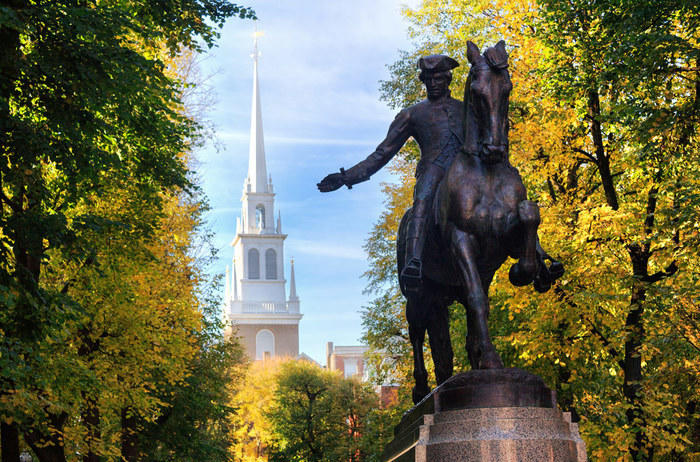
Paul Revere Statue and the Old North Church
About The North End: The North End is one of the oldest parts of Boston with some buildings dating back to the 1600s. Today it is home to approximately 9,000 people. The neighborhood is only one third of a square mile and has some of the most maddening streets so park elsewhere and bicycle, walk or Uber here. The North End is a bit of a transportation center. It has Orange, Green and Blue Line MBTA stations, access to water taxis, and is adjacent to Boston’s North Station (a train station for the commuter rail serving communities north of Boston, Amtrak and Boston & Maine train lines) It is also near places of interest like The Boston Garden, The Boston Public Market, and Faneuil Hall & Quincy Market.
While the North End embraces its Italian heritage, it is no longer a refuge for Italian immigrants and their families. Italians stopped emigrating to Boston in large numbers decades ago, and the North End’s expensive rent pushed most Italian families out of the neighborhood years before that. It is now a rare thing to hear Italian spoken in the North End. However, that doesn’t prevent the North End from hosting huge feasts through much of the summer and being home to more Italian restaurants than any other part of the city. Tourists seem to eat it up (literally) so the neighborhood clings to its identity and the rest of Boston plays along.
Skinny House a.k.a. House of Spite in the North End from Wikipedia
What to do in the North End: There are really two things to do in the North End. The first is eat / drink. I would guess this neighborhood has more restaurant, cafes and bakeries per square block than anywhere else in the city. I’ll talk more about food later so that leaves the other thing to do in the North End; take in its history. This is one of the oldest parts of Boston, dating back to the 1600s. If you’re fascinated by Colonial America and the American Revolution, you’ll love it here.
Sites on the self-guided Freedom Trail include the Copps Hill Burrying Ground (built in 1659), Paul Revere House (built in 1680), Pierce-Hichborn House (built in 1711), and Old North Church (built in 1723). When I would bring friends here, I would often show places of interest that may lack the history of these other sites but are fun to visit, like the crazy All Saints Way on Battery Street and the Skinny House on Hull Street. Legend has it that this 6′ wide house was built in the 1870s out of spite. Sometimes I point out the Prince Building, which is now a luxury condominium building. About 100 years ago it was a thriving pasta company for Prince Spaghetti, which was founded by my great grandfather. As a child, my grandmother would run pasta up and down the stairs of the building.
If all that walking sounds exhausting, grab yourself an Italian pastry or gelato and sitdown on The Greenway or at the end of Long Wharf, and look out into the harbor to watch planes take off and land at Logan Airport.
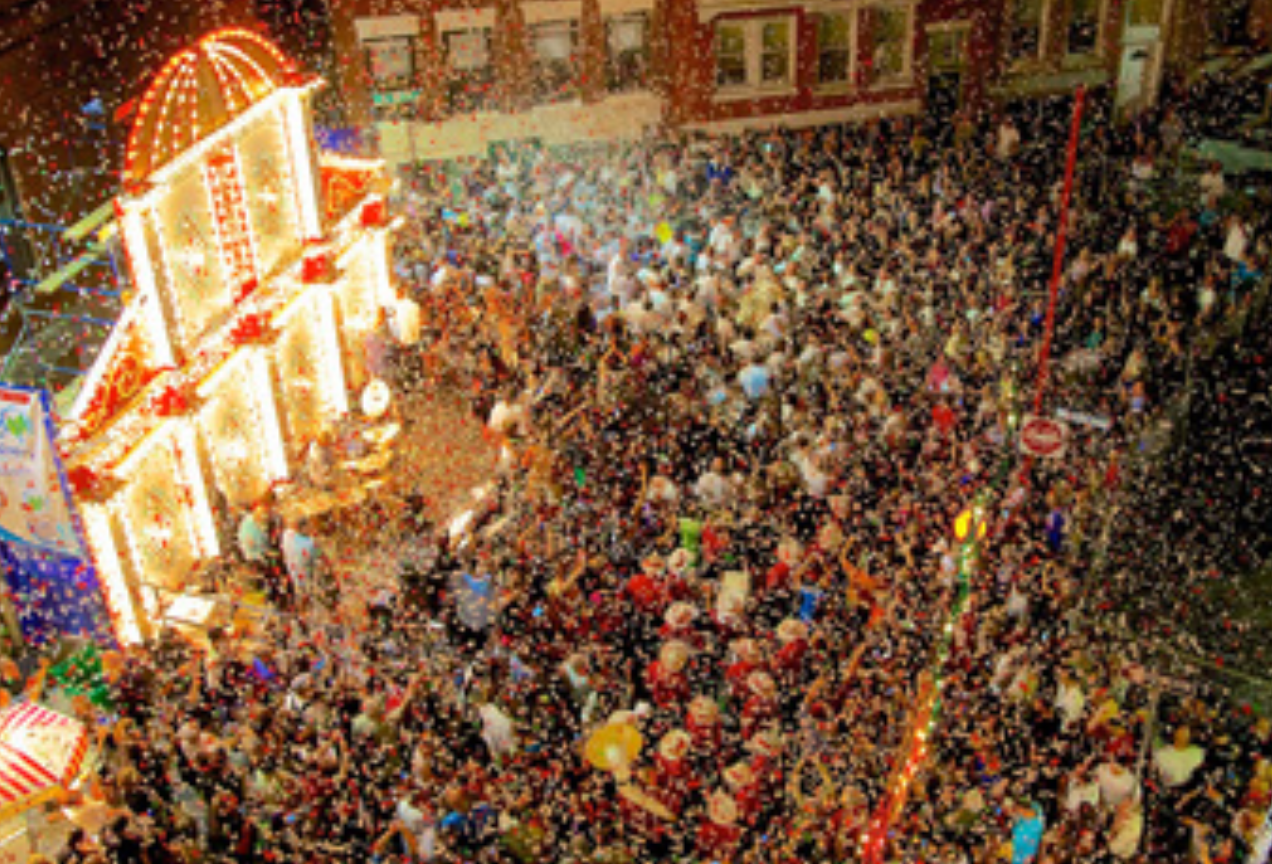
St. Anthony’s Feast North End Boston
Restaurants in North End: This neighborhood takes eating very seriously. If you like seafood, check out Neptune Oyster I realize you may be in an “Italian state of mind”, but trust me when I say it is worth the ridiculous wait and plan accordingly. It is consistently ranked the best seafood restaurant in Boston (and it deserves the distinction). Another place to stop by is Bricco Salumeria or two doors down I also like Monica’s Pasta Shop. While neither are restaurants, the former is an Italian grocer with excellent breads, cheeses, and meats and the latter has great grab-n-go options. You can make a picnic from their selections and sit outside by the water or on the Greenway. Just be sure to hide your bottle of wine in a backpack or bag! Everyone else is doing the same thing.
If you have pizza on the brain then you may want to stop by the North End’s best known pizzeria, Pizzeria Regina, which has been operating since the 1950s. My sister’s family recently stopped by Regina’s, Ernesto’s Pizza Shop and Ducali Pizzeria to see who made the best pizza. From what I understand everyone had a different favorite – the competition is pretty stiff so I’m not surprised there wasn’t a consensus. Should you come to Boston, I recommend you try a similar tasting to determine your favorite.
The list of restaurants in this neighborhood is too long for me to do them justice, but should you find yourself visiting Boston and in need of a recommendation, leave a comment, and I’ll share suggestions based on what you’re looking for (e.g., romantic setting, family friendly, fine dining, etc…).
I rarely order desserts, but this neighborhood has been responsible for my calorie consumption of sweets by the tens of thousands (if not more) over the years. In my late 20s and early 30s, I regularly visited Bova’s Bakery, becuase it is open 24-hours. After a night out drinking this place would call to me. I can’t tell you how many times I tipped my taxi driver with cash and a cannoli. If you like that Italian pastry, I recommend you read my 2014 blind tasting of cannolis, Mike’s Pastry vs. The Modern Pastry Shop.
If you happen to be new to Boston or planning a visit, feel free to reach out to me with any questions. If you are familiar with Boston’s North End, recommendations and comments are welcome.
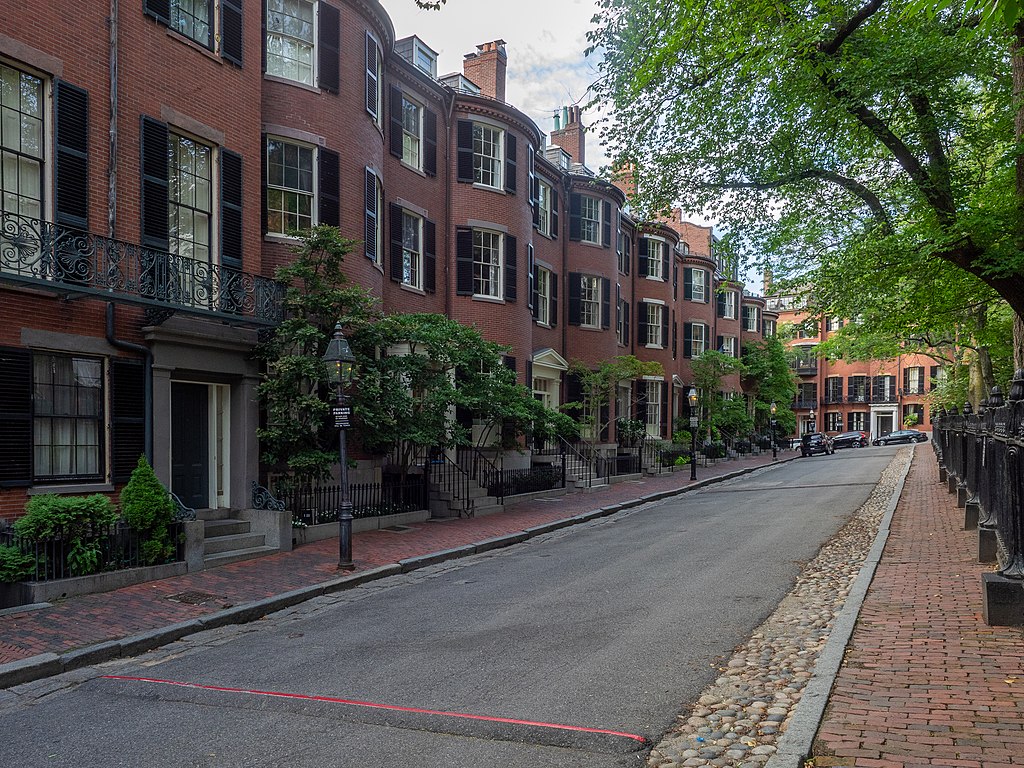
Louisburg Square on Beacon Hill – photo from Wikipedia page
Beacon Hill is a popular destination for visitors. It’s chock-full of history and historical sites, with some dating back to the 1600s. While Beacon Hill is considered a very desireable neighborhood and one of Boston’s (and the nation’s) wealthiest addresses, that was not always the case. As early as the late 17th century, the south slope of Beacon Hill earned the nickname, “Mount Whoredom”. From the 1930s through the 1960s, Beacon Hill was home to many nightclubs and bathhouses that catered to “pansies” who would then spill out onto the Boston Common to cruise for sex. Those days are long gone and difficult to imagine today, considering Beacon Hill’s current prim repute.
I never lived in Beacon Hill, but I spent plenty of time here especially in college and my late 20s. My most vivid memories of Beacon Hill involved the much dreaded moving days for my friend Tom who attended Suffolk University. He always seemed to live on the top floor of every building. Getting furniture up and down those tiny, twisting walk-ups was torture. I distinctly recall hurling pillows out of Tom’s 3rd story window on Joy Street, and him running back and forth in the street trying in vain to catch the flying projectiles. Moving day always resulted in a significant amount screaming profanities at each other. Fortunately, there was always a cold beer (or twelve) after the move.
Massachusetts State House sits atop Beacon Hill
About Beacon Hill Beacon Hill is home to more than 9,000 residents. Despite it’s sky high rents, many Suffolk University students and Mass General Hospital (a.k.a. MGH) residents live here. The neighborhood is also awash with State government employees and lobbyists who spend a lot of time at the Massachusetts State House. Many politicians make this their home, like former US Senator, 2004 Democratic Presidential candidate and Joe Biden’s Special Presidential Envoy for Climate, John Kerry who lives in Louisberg Square.
This tiny neighborhood, which barely spans a square quarter mile, is divided into three sections: the South Slope, facing Beacon Street and The Common; North Slope, facing Cambridge Street and Mass General Hospital; and the Flats, which like its name suggests is not a hill and is sandwiched between Storrow Drive (think Boston’s version of the Henry Hudson Parkway) and the Public Garden.
Acorn Street in Beacon Hill is a favorite spot to snap a photo
What to do in Beacon Hill This is an historic neighborhood known for its Federal-style rowhouses, narrow streets lit by gas lamps and bricked sidewalks. The best examples of this are Louisberg Square and Acorn Street. The neighborhood also has the good fortune of being surrounded by some of Boston’s most beautiful parks including the Boston Common, The Public Garden, and Esplanade. These parks are full of interesting sculptures like this personal favorite in The Public Garden, and in 2022 I’m looking forward to the unveilling of the Martin Luther King and Correta Scott-King memorial on The Common. The parks host many free outdoor workouts, movie nights, concerts and events throughout the year including (my favorite) free performances of Shakespeare on the Common in the summer.
When you get tired of walking around and photographing this quaint neighborhood, you’ll likely find yourself drawn to Charles Street which stretches several blocks from Beacon Street to Cambridge Street along the Flats. Here you’ll find an array of ateliers that include gift shops, antique stores, local grocers and other specialty retailers. There are also more than a few coffee shops and cafes but my favorite is the Tatte Bakery & Cafe because of its central location and outdoor seating. There is a complete list of Beacon Hill shops online here, but I recommend strolling around. It’s a short walk and to quote Boston poet Ralph Waldo Emerson, “it’s not the destination, it’s the journey.”
Contrary to what NBC told you – nobody knows your name here
Food and Drink in Beacon Hill: Cheers, which is located in “The Flats” below The Hampshire House, remains the most famous establishment in Beacon Hill some thirty years after the popular NBC TV show went off air. However, there are far better places to drink and certainly better places to eat. Even though this is one of Boston’s most expensive neighborhoods, there are many good, reasonably priced restaurants. Some of my favorites are 75 Chestnut, which has a lively bar if you can nab a chair. If you’re hungry for pizza, I’ve always enjoyed Todd English’s Figs on Charles Street and right next door is the Paramount, which serves breakfast in addition to lunch and dinner daily.
Beacon Hill also has its share of fine dining if you’re in the mood to celebrate. One of the city’s best restaurants, No. 9 Park, run by Chef Barbara Lynch is just steps from the State House and is the perfect destination to share a romantic dinner. Just around the corner is one of Boston’s best hotels XV Beacon. Their restaurant, Mooo, is an excellent steakhouse, but I prefer their brunch, which they offered pre-pandemic. If you’re craving Italian, the subterranean Grotto Italian restauant behind the State House and Lydia Shire’s Scampo (technically in the West End) are favorites.
Although I rarely go to Beacon Hill for drinks, at one point in my life I clocked a lot of time at The 21st Amendment and The Sevens Ale House. Both are great pubs and fun places to meet up for a drink after work. If you’re more into wine or cocktails, go to Mooo’s bar. I’ve yet to try Peregrine, a relatively new restaurant in Beacon Hill’s newest boutique hotel, The Whitney, but it is on my list of places to try. In good weather, the best option for a drink outside is the patio at Liberty Hotel’s lounge, Alibi.
Destiny Boston is werqin‘ it at Drag Me To Brunch
Gay life in Beacon Hill: Beacon Hill is not a gay neighborhood. It hasn’t had a gay bar or shop for decades, although there are plenty LGBTQ+ residents. Prior to the pandemic, Carrie Nation in Beacon Hill had one of the best drag brunches in Boston called, Drag Me To Brunch hosted by Destiny Boston and Dee Dee de Ray on Sunday afternoons. Fingers crossed this will return later this year. As you can see from the photo above, it is predominantly attended by straight (and loud) women out for a fun afternoon rather than gay clientele.
If you happen to be new to Boston or planning a visit, reach out with questions. If you are familiar with Boston’s Beacon Hill, recommendations and comments are welcome.
View of Back Bay and the Charles River from Cambridge
If you’ve visited Boston, you’ve probably spent time in the Back Bay. It is a centrally located, afluent neighborhood with some of Boston’s most iconic buildings, busiest streets, best restaurants, bars and shops. It is chock-full of office buildings, hotels, retailers, restaurants and of course residents.
In the late 1850s the Back Bay was built from reclaimed land from the Charles River basin to accommodate the city’s growth so this is one part of town that won’t be on the Freedom Trail but it has plenty of history. The neighborhood was built for Boston’s well-to-do families who were looking for more space. Unlike older neighborhoods, this was built on a grid with intersecting streets running north to south in alphabetical order (Arlington, Berkeley, Clarendon Street, etc…). The massive landfill was completed by 1900 and wealthy families flocked to these new Victorian brownstones like The Gibson House, The Ames Mansion, and The Ayer Mansion to name a few.
Boston Public Library McKim Building
About The Back Bay: Back Bay is one of Boston’s wealthiest neighborhoods in America and while it is home to nearly 20,000 residents, it really serves as a commercial center, as well as a playground for tourists, day-visitors and residents from all over the city. Residences dominate the streets closest to the Charles River and Esplanade (Beacon Street, Marlborough Street, Commonwealth Avenue). Shopping and dining options take center stage on Newbury and Boylston Streets and as you move further south larger, commercial buildings designated for hotels and office space dominate the skyline along St. James Avenue, Stuart Street and Huntington Avenue.
When you visit the Back Bay, leave your car behind, because parking is scarce and expensive. The neighborhood is pedestrian-friendly, but if you don’t want to walk the MBTA’s Green Line runs down Boylston Street with three stops in the neighborhood (Arlington, Copley and Hynes) and the Orange Line Back Bay Station is across from the Copley Mall. While many books and movies use the Back Bay as a backdrop, Boston’s Back Bay in the Victorian Era is worth reading to learn about the neighborhood’s history, the people who helped build it and the many prominent familes who moved here in the mid- and late-1800s.
Boston Public Garden
What to do in the Back Bay: If you like architecture, you’ll love the Back Bay. The neighborhood has many churches built in the late 1800s (e.g., Christian Science Church, Trinity Church, and Arlington Street Church to name a few). These aren’t on the scale of Europe’s most famous cathedrals but they do enhance the streetscape and are beautiful. However, my favorite building is the Boston Public Library (a.k.a. the BPL). I love the original McKim building (1895) and the “new” addition that opened in 1972 as well as the many rooms inside but my favorite part of the library is the Italianate courtyard. It is a wonderful place to relax and grab a coffee.
However, I think the most photographed building in the Back Bay is probably I.M. Pei’s Hancock Tower built in the 1970s. It’s mirror reflection of the original Hancock Building (now the Berkeley Building) captures the spirit of Boston; modern, bold and forward thinking but proud and mindful of its past. Pei intentionally designed the Hancock Tower to reflect the (original) 1947 beaux arts Hancock building, ensuring we remember and learn from our history. If his design and architecture looks familiar it is because Pei would go on to become one of the most admired architects of the late 20th century. He would famously go on to create the glass pyramid for the Louvre in Paris.
The Back Bay has some of the city’s most beautiful parks. The homes lining Commonwealth Avenue look out onto the Commonwealth Mall, which is decorated with sculptures on each block and framed by large elm trees. I think it’s most beautiful in the summer and in December when the trees are full of tiny white lights. It is also the narrowest part of Boston’s chain of parks referred to as the Emerald Necklace. From the Mall, you can stroll up to the Public Garden, which is the oldest part of the Back Bay and where the marshland was first filled. It is the nation’s oldest public garden and dates back to 1837. Then there is my favorite park in the city, The Esplanade, which stretches beyond the Back Bay and has paths for walking, jogging and biking. There is always something happening here and it is an idyllic setting for a jog, a picnic with friends or in my sister’s case, a marriage proposal.
Restoration Hardware Boston in the Back Bay
Shopping in the Back Bay:Newbury Street is a favorite destination for shopaholics and window shoppers alike. Many luxury brands and art galleries can be found at the start of the street with more ecelectic shops (like my personal favorite, Trident Booksellers & Cafe) and musicians busking for tips in the blocks that follow. If the weather isn’t cooperating, walk over to the city’s only downtown malls (Copley and Prudential), which are adjoined via a pedestrian walkway over Huntington Avenue.
Shops open and close with a speed that can make your head spin. Rising rents and online shopping has been the demise of many independent shops. I still miss Boston’s LGBTQ bookstore, Glad Day Bookstore in Copley Square, but there is always a new shop opening and there is something for everyone. Need an ancient fuse for your apartment that hasn’t been rewired since the 1970s? No worries, head over to Economy Hardware on Mass Ave. Need a statement gift for someone who already has everything? Go to Simon Pearce or Shreve Crump & Low. Want to grab a bottle of wine to bring to a dinner party later this week? Bauer Wines has you covered. There are also more clothing, shoe stores and salons than I could possibly list covering every trend and budget from Valentino to T.J. Maxx.
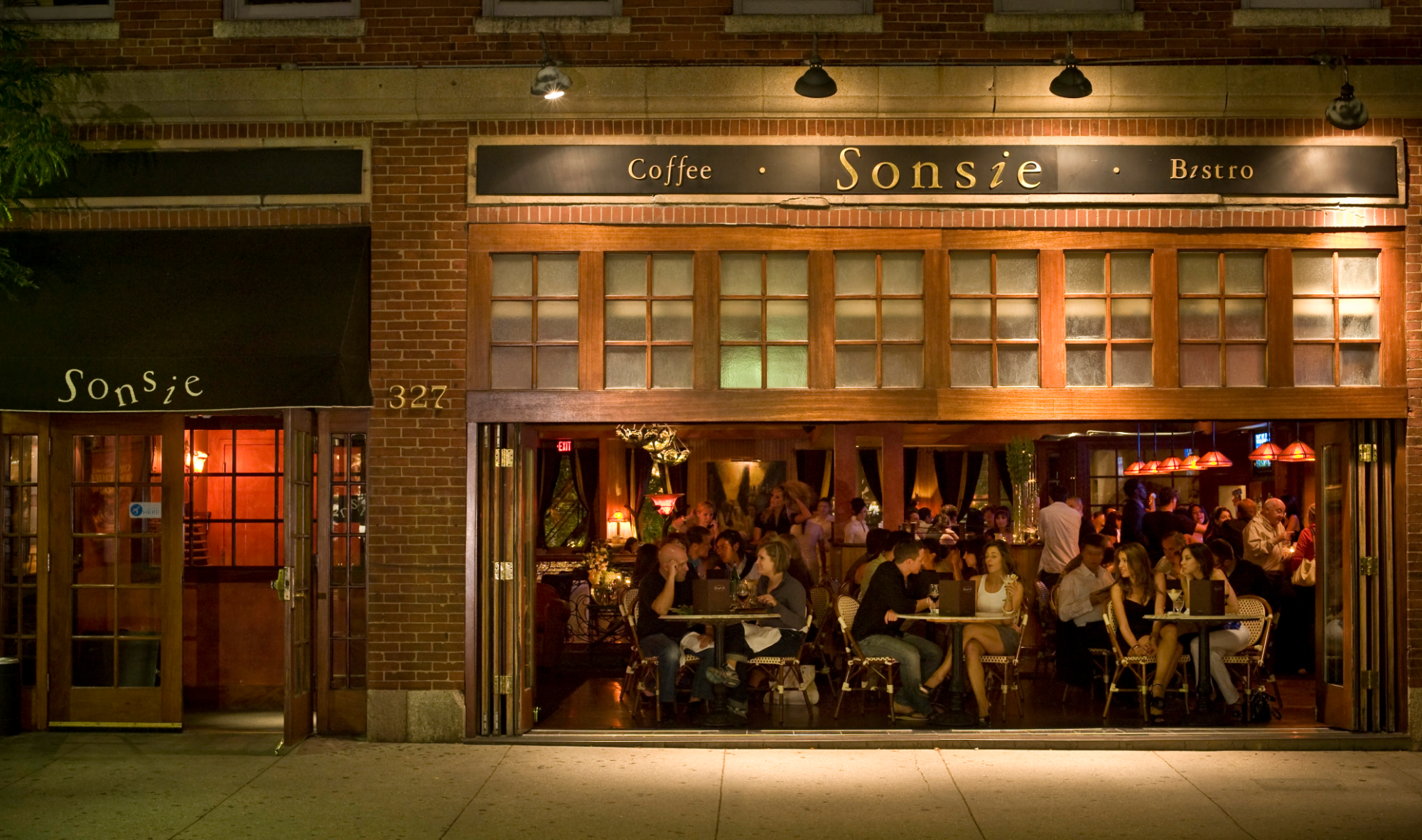
Sonsie Boston photo from TripAdvisor
Restaurants in Back Bay: This neighborhood has everything you could want from cheap eats to some of the priciest meals in the city. It would be difficult to do this neighborhood justice in a single post, but I feel compelled to share a few places I enjoy.
If you’re more of a cheap eats diner, head over to the stretch of Boylston Street just west of Massachusetts Avenue and join all the Berklee music students at the fast casual dining options set up along this stretch of Boylston. If you’re willing to stand in line (there is always a line), probably the best noodle shop in Back Bay is Santouka. While it isn’t a “cheap eats”, it is still on the cheaper end for dining and their all-day breakfast menu makes the Trident Booksellers & Cafe on Newbury a personal favorite. However, many people come to the Back Bay to eat outside and for years Sonsie has been the place to see and be seen. However there are a great many cafes and restaurants that offer streetside dining like Atlantic Fish Co., Stephanie’s on Newbury and Piattini to name a few.
For a more romantic setting, I love the hidden Mexican restaurant, Casa Romero’s private patio garden, or reserve a table at La Voile. For a finer dining experience Deuxave (French), Uni (Sushi and Asian), Sorellina (Italian), Grill 23 (Steakhouse) and the Fairmont Hotel’s Oak Long Bar + Kitchen (American) in Copley Square are all great options. A newcomer to the Back Bay dining scene, scheduled to open in June 2021, is the rooftop restaurant and bar, Contessa, at the newly remodeled and branded Newbury Hotel. The restaurant is gorgeous and the expectations for the food and service are high. It is worth putting on your list of places to try this summer or fall.
Although I’m not one to spend a lot of time discussing sweets, the Back Bay has something to tempt everyone. For me it is a small independent chocolatier based in New Hampshire with a shop in the Back Bay called L.A. Burdick. When I am in the Back Bay I try not to walk within a block of this cute shop and cafe, because I inevitably find myself buying something. In the winter I rationalize the calories by purchasing the best hot chocolate in the city to keep me warm.
Bukowski Tavern in the Back Bay
Favorite Bars in the Back Bay: So many bars have come and gone over the years and recently, the coronavirus has driven a stake through the heart of many long-standing bars. It is my hope that those remaining establishments will be able to pull through. Similar to other residential neighborhoods, most of the bars in the Back Bay are also restaurants so places like Sonsie, Oak Long Bar + Kitchen and Grill 23 (all previously mentioned) are popular places in part due to their large bars to grab drinks with friends. However, if you’re looking to sit outside, there are only a few bars that have patios. The best option is the Loews Hotel restaurant and bar, Precinct. Their large sunken, lounge-like patio with comfortable furniture is a popular place to meet up after work for a drink.
One of my favorite dive bars in Boston is (ironically) located in a parking garage. Bukowski’s Tavern, named after a German-American poet, is the only bar I regularly visited when I lived in the Back Bay that remains open. Back then, if you hesitated ordering a beer the Irish bartender would spin a wheel on the wall behind the bar (you can see it in the far right in the photo). Whatever it landed on was what you received. This happened to me once, and I was stuck with a $20 specialty Belgian beer. I never again hesitated.
Gay Life in the Back Bay: This neighborhood has many LGBTQ+ residents. Moreover, this is where many travelers opt to stay when they visit Boston because of its central location, proximity to points of interest and Boston’s traditional (if no longer) gayborhood, the South End. Gay bars, bookstores and other shops moved out of the Back Bay mostly due to high rents by the late 1990s. My favorite gay bookstore in Copley Square, We Think The World of You, closed about 20 years ago. The last gay bar I can recall in the Back Bay closed before that. However, on any given night you will see gay friends meeting for drinks at many restaurants and bars in the neighborhood. If you are visiting and would prefer a gay owned establishment that markets themselves to the LGBTQ community go to Club Cafe on the Back Bay / South End line.
If you happen to be new to Boston or planning a visit, feel free to reach out to me with any questions. If you are familiar with Boston’s Back Bay, recommendations and comments are welcome.
Traveling between Boston and Provincetown (a.k.a. Ptown) is easy. Driving is the most common form of transportation but it is the slowest way to travel between Boston and Ptown and can take much longer than ferry service or flying.
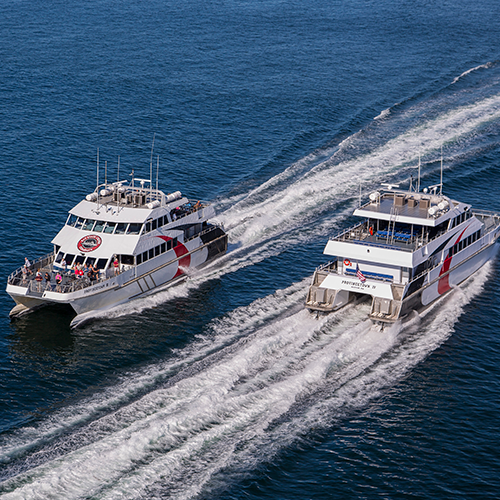
Provincetown High-Speed Ferry Service
Ferry service is a convenient way to travel. Two companies offer high-speed ferry service that is faster than driving (90-minutes) and have the added benefit of some amazing views. If you are flying into Boston, enroute to Provincetown, water taxi service is available as are the Blue and Silver Line subway lines.
Boston Harbor City Cruises: Provincetown High-Speed Ferry is the larger and slightly faster ferry service between Boston and Provincetown. The Salacia has a capacity of 600-people but it remains to be seen if any capacity restrictions may be implemented due to COVID-19. The 2021 Summer ferry service to Provincetown begins on May 16th. For more information visit the 2021 Boston Harbor Cruise Provincetown Ferry Schedule. The cost of a ticket is $95 RT or $63 one way (Mon – Thurs) or $98 RT or $64 one way (Fri – Sun).
Boston Harbor City Cruises is located at One Long Wharf, Boston MA and is accessible by water taxi (from Logan airport and other parts of the harbor), the Blue Line Aquarium MBTA station, and there is a Boston Blue Bikes docking station at Long Wharf. For more information visit them online or call them at 617-227-4321.
Bay State Cruise Company: Conveniently located in Boston’s Seaport District the Bay State Cruise Company offers a 149 person high-speed ferry with service between Boston and Provincetown 7-days a week. The 2021 Summer ferry service to Provincetown starts on May 16th. For more information visit the 2021 Bay State Cruise Company Ferry Schedule. The cost of a ticket is $90/$96 RT or $61/$64 one way. The higher price is for peak demand departure times.
Bay State Cruise Company is located at the Seaport World Trade Center Marine Terminal on Seaport Boulevard. It is easily accessible by water taxi (from Logan airport and other parts of the harbor), the Silver Line World Trade Center MBTA station, and there are two nearby Boston Bikes docking stations. For more information visit them online or call them at 617-748-1428.
Flying to Provincetown
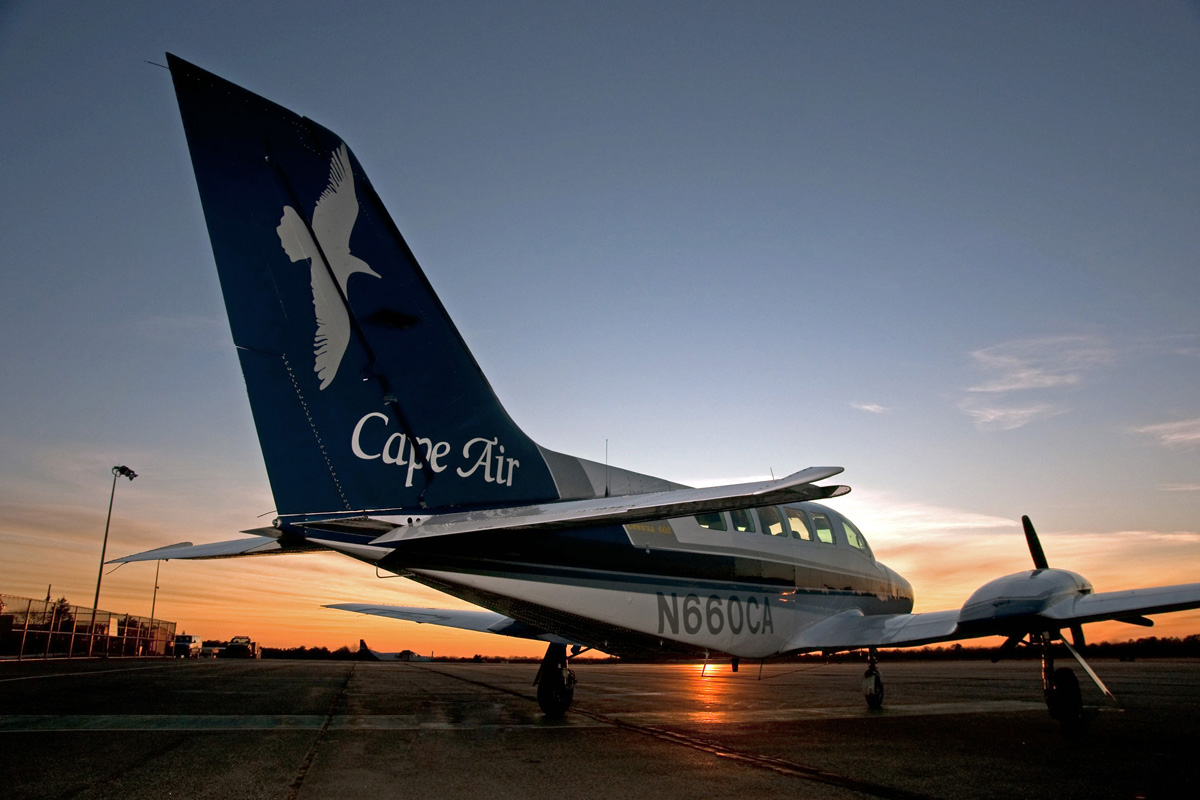
Cape Air is the only airline to offer daily flights between Boston and Provincetown. With a flight time of approximately 25 minutes this is the fastest way to travel between Boston and Provincetown.
The planes used by Cape Air are tiny but reliable and the Provincetown airport is a 10 minute drive to the center of town. Cape Air also provides flights to Provincetown from White Plains, NY, Saranac Lake, NY, and Portland, ME (but not with the same frequency).
For information about flight times and fares or to book a flight visit Cape Air.
Bus service to Provincetown
The most affordable way to travel between Boston and Provincetown is bus service. It also happens to take the most time (approximately 4 hours), but for those on a budget it is hard to beat the price, which fluctuates but can cost as little as $20 each way. Click the link to learn more about bus service to Provincetown.
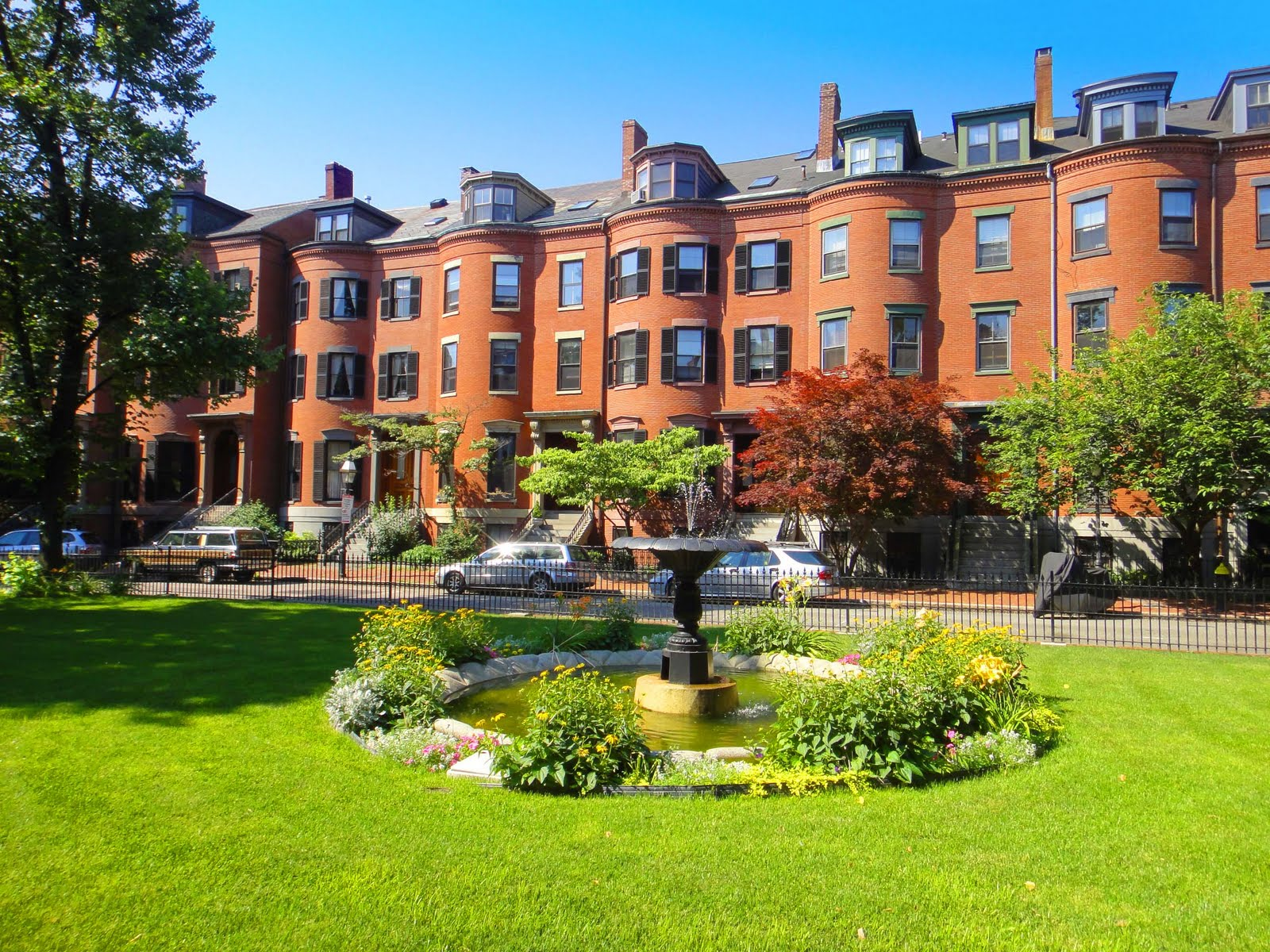
Boston is where I live, but the South End is home. If you visit Boston, you’ll understand this city is defined by its neighborhoods. Each have their own history, architecture and personality. The South End was one of America’s earliest large-scale residential developments and much of that pre- and post-Civil War architecture remains. A good example is Boston’s Union Park in the South End, which was built in the late 1850s.
In the first half of the 20th Century, the South End would become the home for many immigrant groups notably Greek, Lebanese, Africans, and Caribbean/West Indies. It also became home for many in the city’s Black population (e.g., 395-397 Massachusetts Ave was home to Martin Luther King Jr. in the early 1950s). In the early 1970s many artists and gay men moved here for the cheap rent. By then the neighborhood had a well-deserved seedy reputation and was afflicted by urban blight and crime. It wasn’t until the 1990s that Boston’s population started to rebound and places like the South End started to flourish again. That gentrification would also result in Boston’s gay population moving out to Dorchester, Jamaica Plain, Davis Square and elsewhere.
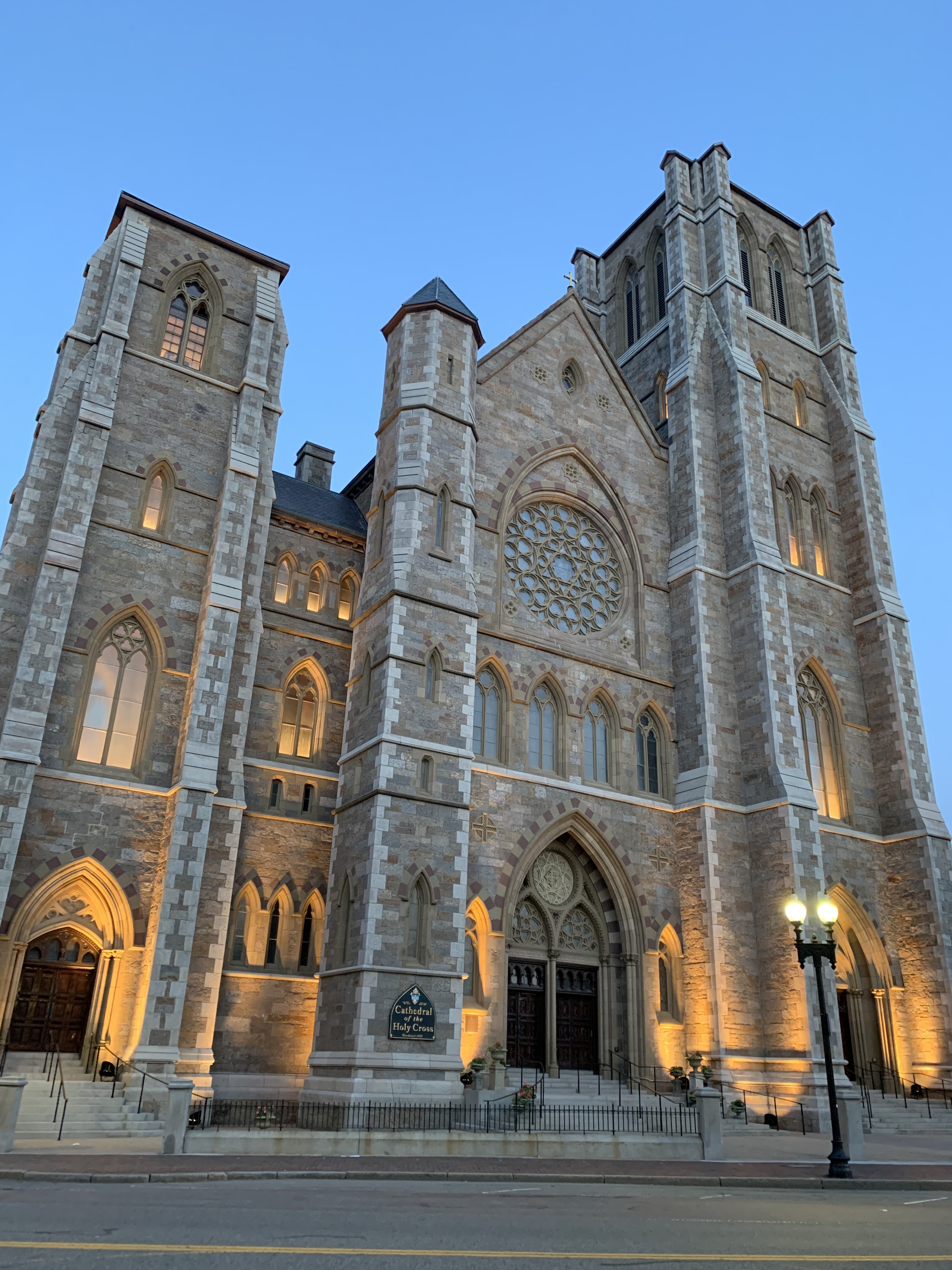
Cathedral of the Holy Cross in Boston’s South End
About The South End: The South End is a contradiction. It has some of the most affluent properties and toniest addresses in the city. Yet, it’s home to the city’s largest soup kitchen, Pine Street Inn, large public housing complexes, Boston’s safety net hospital Boston Medical Center and its neighboring Healthcare for the Homeless. Despite its affluence, these institutions (thankfully) aren’t going anywhere. It is this socio-economic mix that has saved the South End from becoming one-dimensional and gives it personality.
The South End is incredibly charming. Built on landfill in the mid-19th century as a residential district for Boston’s growing upper middle-class, hundreds of Victorian Bow Fronts were built and today it’s the largest enclave of urban Victorian residential architecture in the country. However, one of the most beautiful buildings in the South End isn’t Victorian, it’s Gothic Revival architecture. The Cathedral of the Holy Cross (est.1875) made from nearby Roxbury puddingstone and gray limestone stands in stark contrast to the Victorian and newer glass and steel residential buildings in the SoWa district of the South End. If you get a chance, look inside. The Cathedral was recently lovingly cleaned and restored and it is beautiful inside and out.
What to do in the South End: The South End is a picturesque, residential neighborhood with many parks to enjoy. If you spend any time here, you’ll likely find yourself walking through some of these green spaces. Some of our favorite parks are The Underground, Peter’s Park, Blackstone & Franklin Squares, and the Southwest Corridor, which divides the South End and Back Bay.
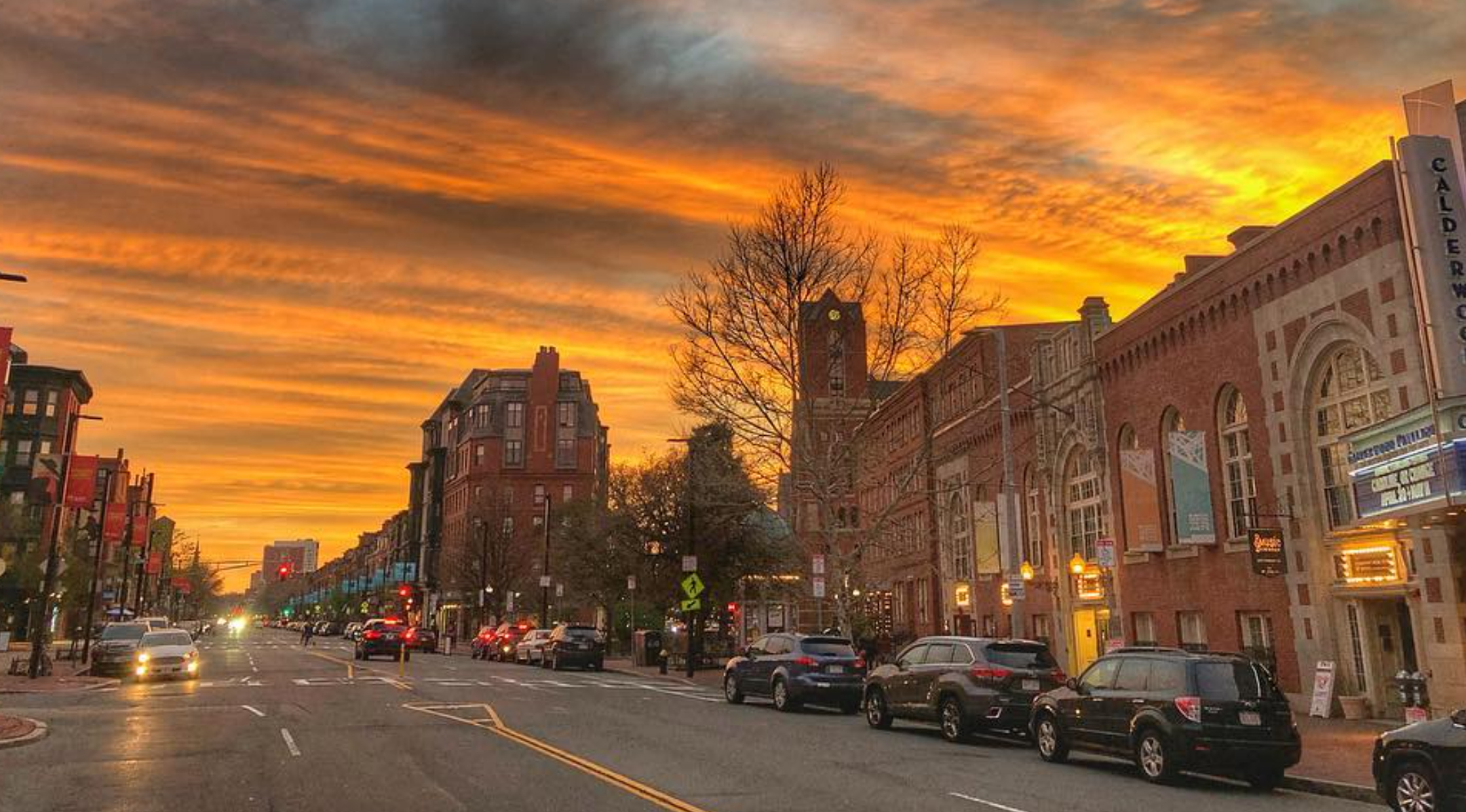
Aside from strolling through the parks and streets of the South End, I love the local theater companies that (when there isn’t a pandemic) perform at the Black Box Theater and Calderwood Pavilion. I think of the South End as a mini-theater district with The Huntington, SpeakEasy Stage and Company One all providing entertaining shows. Additionally, the First Friday of each month from 5-9PM is SoWa First Fridays where scores of art galleries and artisans open their studios to the public. The theater companies and First Fridays bring many people here for a fun date night or evening out with friends – especially when followed by drinks and dinner (but more about that later).
In addition to window shopping (there are many unique shops, complete listing here), enjoying the parks, or checking out the local arts scene, the South End hosts several markets and events. One of my favorites is the SoWa Open Market, which runs each Sunday (May thru October). It includes an artisan and farmer’s market, food trucks and a vintage market (this runs year round). There are also many interesting exhibits and events hosted at the BCA Cyclorama and at the new events and exhibition venue, The South End Power Station, but if all that sounds exhausting, don’t worry there are many places to relax.
Cafes in the South End: One of the things I love about this neighborhood is its many cafes and restaurants. Visitors may feel lost with very few national chains present (which by the way is a good thing), but it adds personality and allows local chains and sole proprietorships to thrive. In 2015, I wrote about the cafes in the South End. Since then a few have closed and a few have opened but the point is there are many places to meet a friend to enjoy a good cup of coffee and tempting treat or two. A favorite new coffee shop is MOD Espresso on Harrison Ave. If you’re in the n’hood, stop by and let me know what you think.
In 2014, I hosted a blind tasting to find out who made the best chocolate chip cookies in the South End. Should I write a new post about the many cafes or host another blind tasting to find the best chocolate chip cookies in the n’hood? Let me know your thoughts in the comments section.
Source: Aquitaine Group
Restaurants in the South End: Every restaurant I wrote about in my 2018 post, Best Places to Eat in the South End, have weathered the pandemic and remain open. If we can set the current pandemic aside, dining out in the South End has changed for the better in recent years. There are more affordable and casual dining options, and a greater variety of cuisines to enjoy.
The neighborhood has some of the best Italian and French restaurants Boston has to offer (too many to list). It also has great Asian restaurants (personal favorites include Elephant Walk and Myer’s + Chang), Eastern Mediterranean cuisine (Kava and it’s sister restaurant, Ilona as well as the fast casual, Anoush’ella are superb). Several excellent Spanish restaurants are home to the South End but Toro is my favorite. For sushi, I prefer the unpretentious Seiyo near Mass Ave. or Red Lantern. There are many options for pizza, but my favorites are Union Park Pizza (take out only) and PICCO (which stands for Pizza & Ice Cream Co.). In recent years, several Mexican and Latin restaurants have opened but my favorites are the relatively new Burro Bar and the longstanding Orinoco. I still blush thinking about my first time at Orinoco. In my haste to get inside, I accidentally knocked over Keith Lockhart. We fell into each other’s arms as we crashed into the wall so I suppose I can say I’ve hugged the famous conductor of the Boston Pops.
The list of great places to eat in the South End is long, and I’ve barely scratched the surface. If you’re looking for a suggestion, ask me, and I’ll be happy to make recommendations based on your preferences.
Boston Chops South End bar is a personal favorite for drinks and a bite
Favorite Bars in the South End: There are many places to enjoy a cocktail or drink, but if you want to enjoy live music go to the tiny and quite famous, Wally’s. It is one of the oldest jazz bars in America (opened in 1947) and has hosted some of America’s greatest jazz musicians. A few blocks over from Wally’s is Darryl’s Corner Bar & Kitchen, and in the opposite direction, up Tremont Street is the Beehive. All three locations have excellent live music and are places worth visiting. Darryl’s and the Beehive also have kitchens that crank out consistently good food if you’re hungry.
If you’re a beer drinker, go to JJ Foley’s, an Irish pub that has been operating in the South End since 1909. This place has a lot of character and serves a mean shepard’s pie. On the other end of the neighborhood, is a relative newcomer by comparison, Five Horses Tavern, which opened in 2013. Both places will make any beer drinker feel at home.
If you’re looking for something more kitsch, check out the subterranean, Polynesian bar and restaurant with great tiki drinks Shore Leave or longtime neighborhood favorite, Delux Cafe with its ticky-tacky decor and quirky staff. The bars you’ll mostly likely find Sergio and me at is the gorgeous 20+ seat bar at Boston Chops and the welcoming lounge at Burro Bar South End (if you like spicy drinks order the el Diablo). However, I also love the gorgeous U-shaped bar at Barcelona Wine Bar and the cozy wine bar at Aquitaine (they have an excellent Sancerre rosé by the glass).
Gay Bars in the South End: Only a few gay bars remain in the South End. Cathedral Station is located on Washington Street and is the only downtown gay bar with a patio. They cater to the gay sports leagues and the bear community. You’ll usually find an older crowd here, but all are welcome at this friendly bar. The other gay bar in the South End is Club Cafe. Over the years it has become increasingly mixed but they still market themselves as a gay bar. Club Cafe has the Napoleon Lounge where cabaret music is performed, a dance floor in the back and a dining room and bar at the front of the house. If you’re gay and in Boston, you’ll eventually end up at Club Cafe.
While it’s true that Boston has very few gay bars, Boston’s LGBTQ+ community is redefining what is a gay bar and claiming space to meet, have a drink, gossip, watch a game, etc… whether the establishment is marketed as a “gay bar” or not. Good examples would be Boston Chops South End, Burro Bar South End, Trophy Room, Anchovies, and Elephant Walk. On any given night you will see gay friends meeting for drinks and as a result the local LGBTQ+ community has come to think of these places as ‘unofficial’ gay bars. While they are no longer around, virtually every gay man in Boston thought of Pho Republique, Rocca, Tremont 647, Sister Sorel, and Stella as some of Boston’s best gay bars, yet none were marketed as such.
If you happen to be new to Boston or planning a visit, feel free to reach out with questions. If you’re familiar with Boston’s South End, your recommendations are welcome in the comments section.
The 37th Annual Wicked Queer Film Festival (Boston’s LGBTQ+ film festival) will be hosted once again on Xerb TV and begins April 1, 2021. The festival will include 17 short programs and 22 feature films this year.
Learn more about the film festival at their virtual Splash Party on @GATHER this Sunday, March 28 from 2:00 – 4:00 pm. (Note the link will remain locked until Sunday afternoon.) Wicked Queer will be sharing trailers of films that will be featured at this year’s festival, setting up chats to talk about the programming and to answer questions and of course there will be music from the talented DJ Brian Halligan.
Wicked Queer Film Festival Splash Party @GATHER Sunday, March 28 2:00 p.m. – 4:00 p.m.
Russ Lopez book, The Hub of the Gay Universe: An LGBTQ History of Boston, Provincetown and Beyond shares how vibrant Boston’s gay scene was through the much of the 20th century. After WWII, Boston had more than a dozen gay bars. Those numbers would continue to proliferate over the coming decades (peaking in the 1970s – 90s) alongside other businesses that catered to the local gay community.
Last year Machine / Ramrod closed after a developer purchased the building it was located in to turn the block into residences. And a few weeks ago, I shared that the Boston Eagle has permnantly closed. The loss of these spaces has reignited the discussion about the slow demise of the gay bar in Boston, and it made me wonder, what gay bar from Boston’s past do you miss the most?
Dine Out Boston (March 14 – 28) starts next week. Here is a full list of participating restaurants for this year’s, Dine Out Boston. If you’ve never participated or you need a refresher, participating restaurtants offer a three course prix-fixe menu for lunch ($15 | $20 | $25) and dinner ($28 | $33 | $38). Call ahead to inquire about the menu and to make your reservation. For more information visit the Dine Out Boston website.
Outdoor dining on public sidewalks and parking spaces will return to Boston by April 1, 2021 (weather permitting). The program which was expanded last year to help restaurants and the public dine outdoors, was well received and wildly popular. Eater Boston has an excellent article with more details around the program and why it is returning to the sidewalks and streets of Boston in a few weeks, which you can read here.
Look for a large, new parklet to be built by Boston Chops South End on Union Park Street to expand their outdoor dining capacity. The exact number of seats to be added is yet to be confirmed but will be significant and a welcome addition to the neighborhood for patrons who want to support local restaurants but prefer dining alfresco.
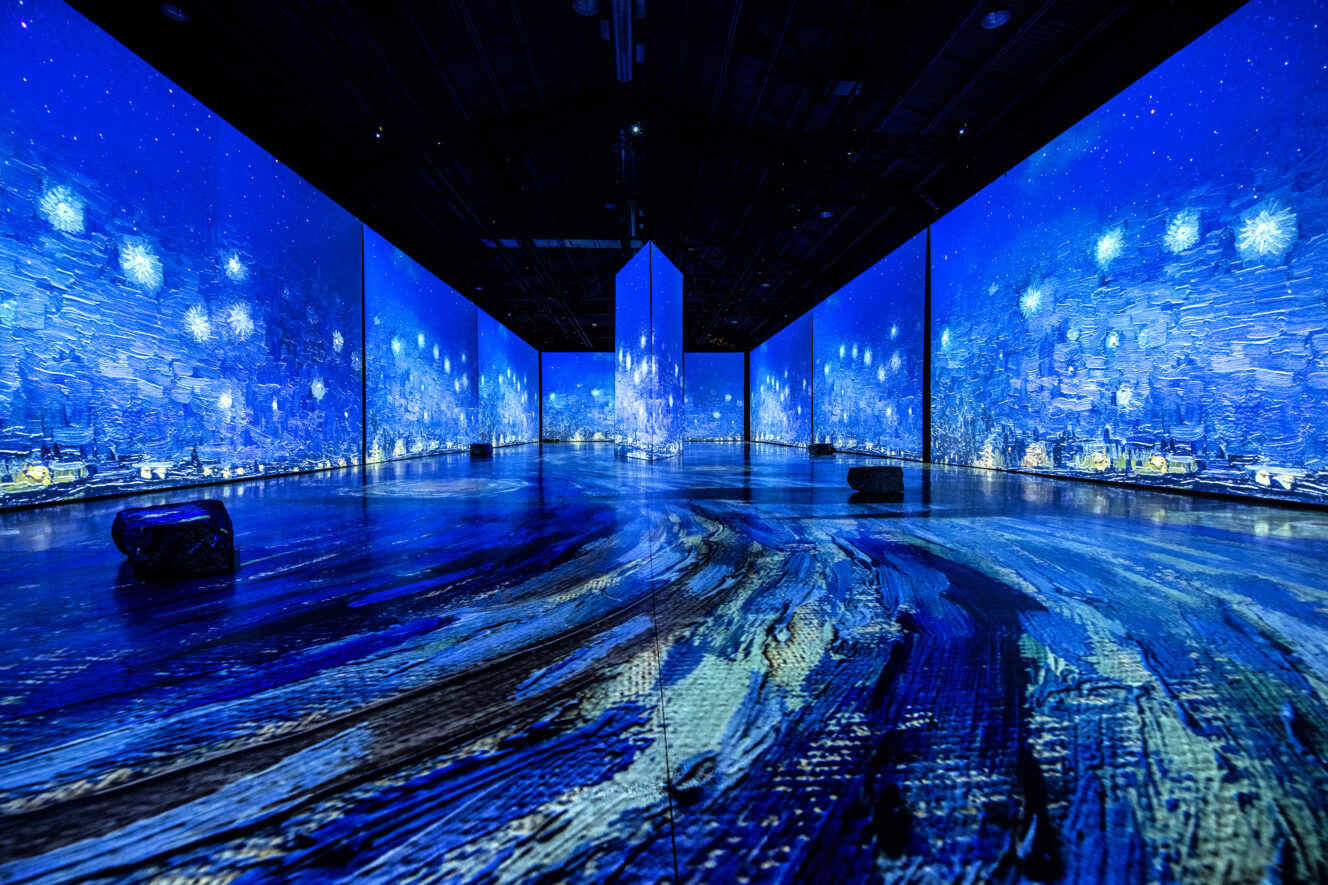
The immersive event, which opens later this year, is a unique media exhibition of the works of Vincent Van Gogh. The program is designed to engage your senses of sight and sound by pairing the images with music of great composers like Mozart and Bach. Famous paintings like The Starry Night will be projected as large three dimensional images and shapes allowing you to explore and experience his masterpieces in all their fine detail.
Tickets are currently on sale and is expected to sell out. You can learn more about this one-of-a-kind exhibition and purchase tickets by clicking on the link above. This exhibit will be open in Boston for approximately eight weeks starting the week of Christmas and running through the first weeks of 2022.
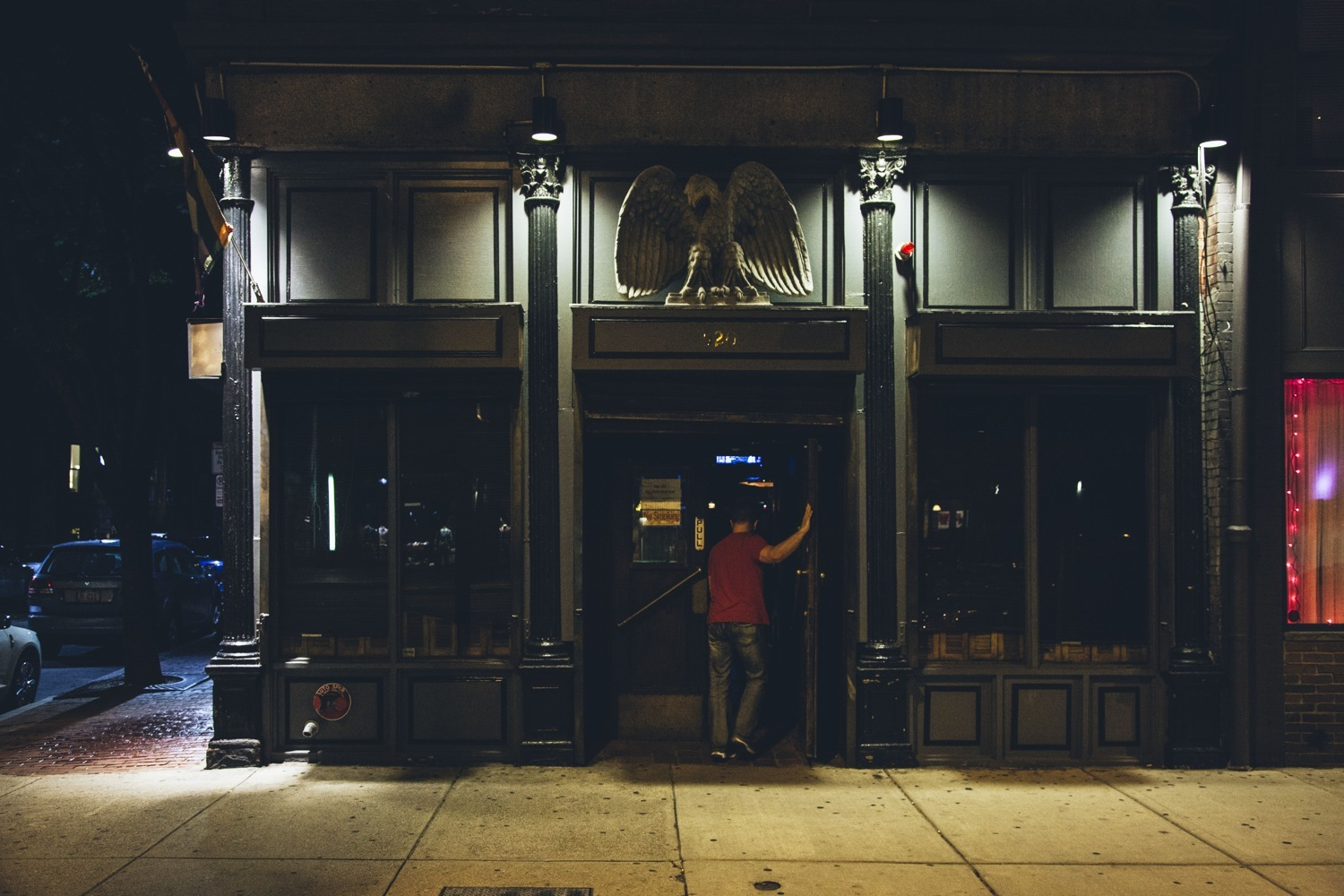
Another gay bar in Boston bites the dust. The space formerly occupied by the Boston Eagle is now for rent.
I started getting texts about four weeks ago that the Boston Eagle (a.k.a. “The Dirty Bird”) had closed and was for rent. After doing a little digging I was able to confirm it is for rent. The lease for the 1,400 sq. foot bar also comes with the use of a license for food, entertainment and liquor until 2:00 AM.
The Boston Eagle has been operating for more than 40 years but for more than a decade, the bar was probably best known as a last stop before heading home for the night. The bar was typically busiest between 12:30 – 2:00 AM, after which many would comment on the “sidewalk sale” that would spill out on to Tremont Street as people would forgo looking for “Mr. Right” and settle for “Mr. Right Here, Right Now”.
The bar also proved to be confusing for many out of town gay visitors since many gay bars called The Eagle, cater to the leather crowd. However, The Boston Eagle was always, first and foremost a neighborhood bar, catering to all who could weather the withering stare from Jack the bartender. I do not know what will go in here next, but I do hope that whatever its next iteration, it remains a LGBTQ-friendly space.
Last week Boston Pride announced that the Parade and Festival scheduled in June would be postponed to a date later this fall. Today, the popular music festival Boston Calling announced it too will be canceling the annual three-day event in Allston at the Harvard Athletic Complex. It had been scheduled for May 28-30, 2021.
Organizers have promised the festival will return Memorial Day weekend in 2022. You can read their full statement as well as information about ticket refunds on their website, bostoncalling.com.
The LGBTQ+ community once again has a friend and ally in the White House, but equally important is the increasing number of friends and allies we have in the business community. The Human Rights Campaign (HRC) recently released their Corporate Equality Index (CEI) for 2021 and the news is good. A recordbreaking 767 businesses met all the criteria to earn a 100% rating and the designation of being a “Best Place to Work for LGBTQ Equality.” Locally, more Massachusetts businesses earned that distinction as well.
The index, started in 2002, serves as a national benchmarking tool on corporate policies, practices and benefits pertinent to lesbian, gay, bisexual, transgender and queer employees and serves as a driving force for LGBTQ+ workplace inclusion. There are three key pillars to the index rating that focus on: (1) non-discrimination policies across business entities, (2) equitable benefits for LGBTQ workers and their families and (3) supporting an inclusive culture and corporate social responsibility.
Forty-eight (48) companies in Massachusetts earned a 100% score from the HRC CEI 2021. This represents a 20% increase from the 2020 index when only 40 companies in Massachusetts earned a perfect score.
A multi-sensory winter illumination experience called, Hatched: Breaking through the Silence, launches today at the Esplanade’s Hatch Shell. The 15-minute visual and sound performance has been desiged specifically for the 80-year-old amphitheater and has been created by Boston-based artist Maria Finkelmeier.
Presentations will run daily from 5pm to 9pm starting every 20 minutes.












 BosGuy